
Last updated November 15, 2026
 Raised-panel steel
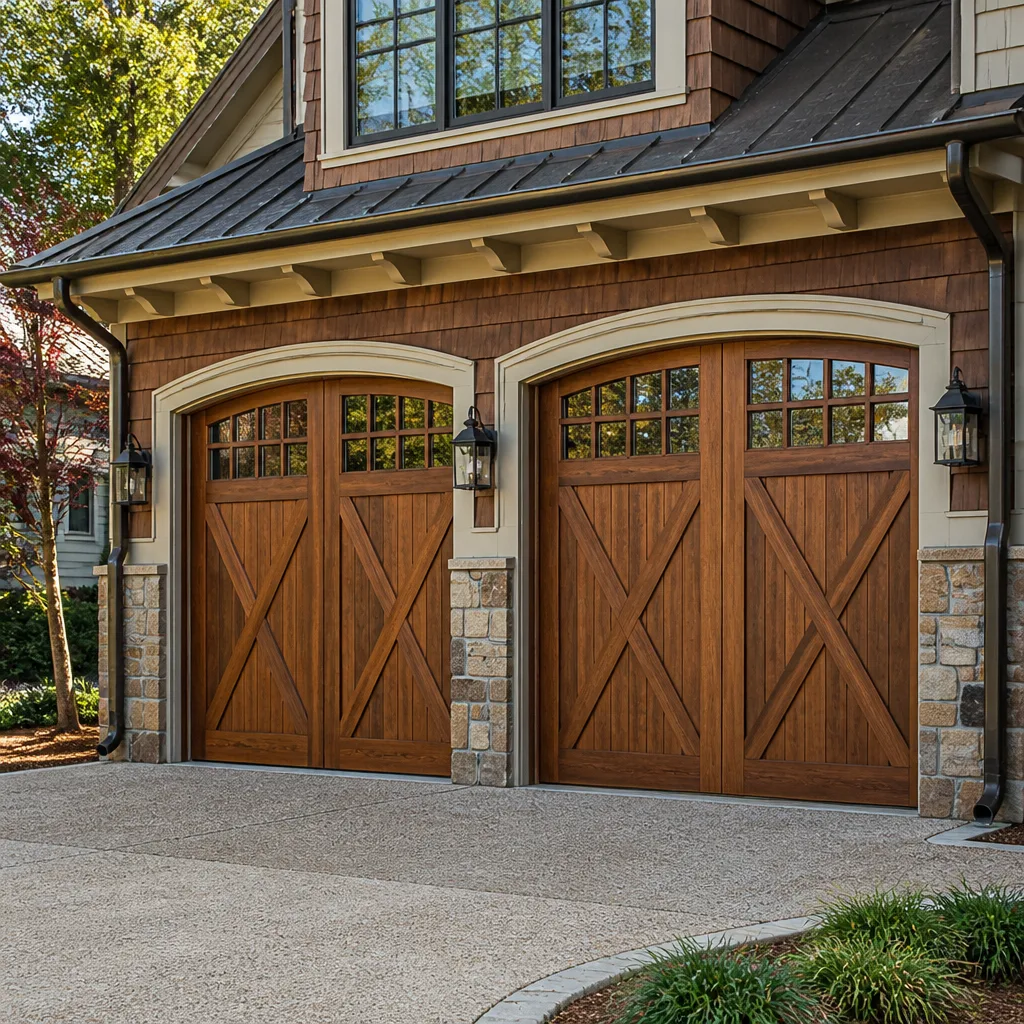 Carriage house
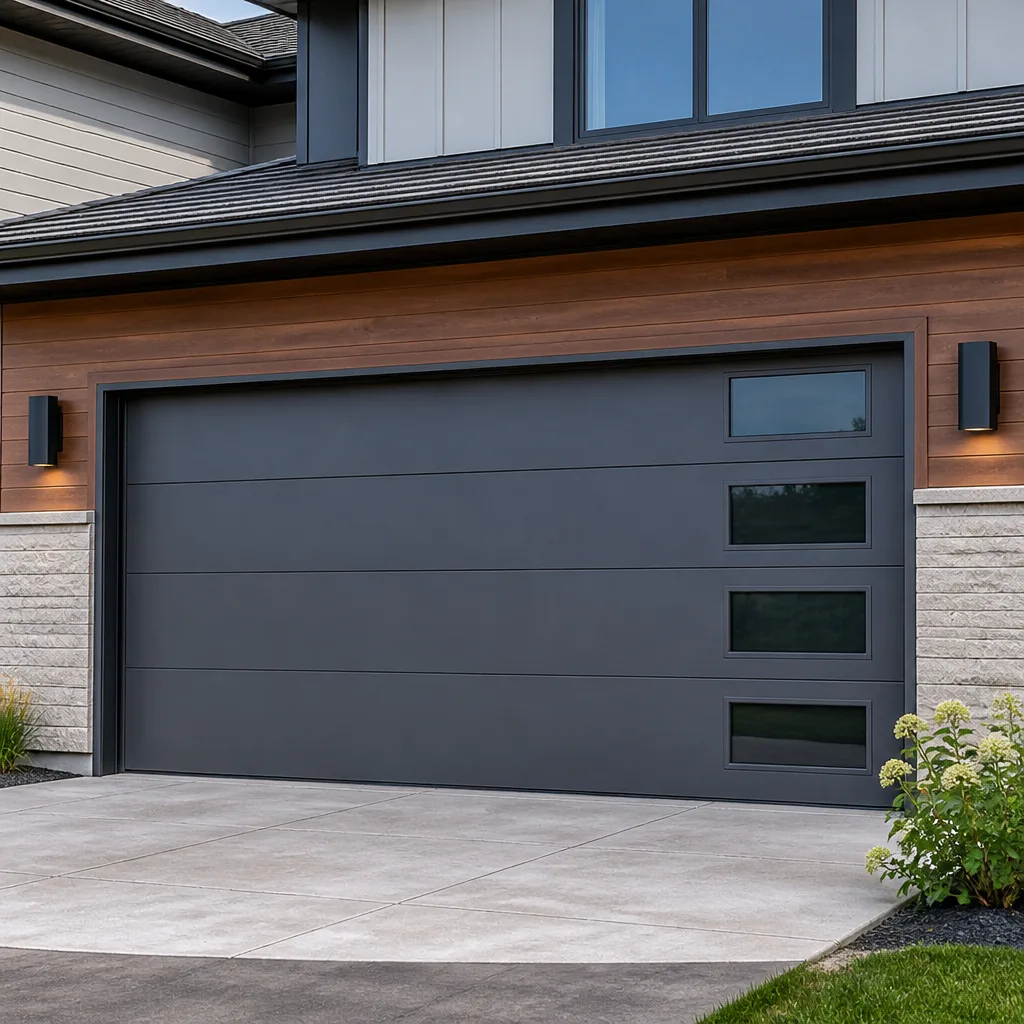 Modern flush
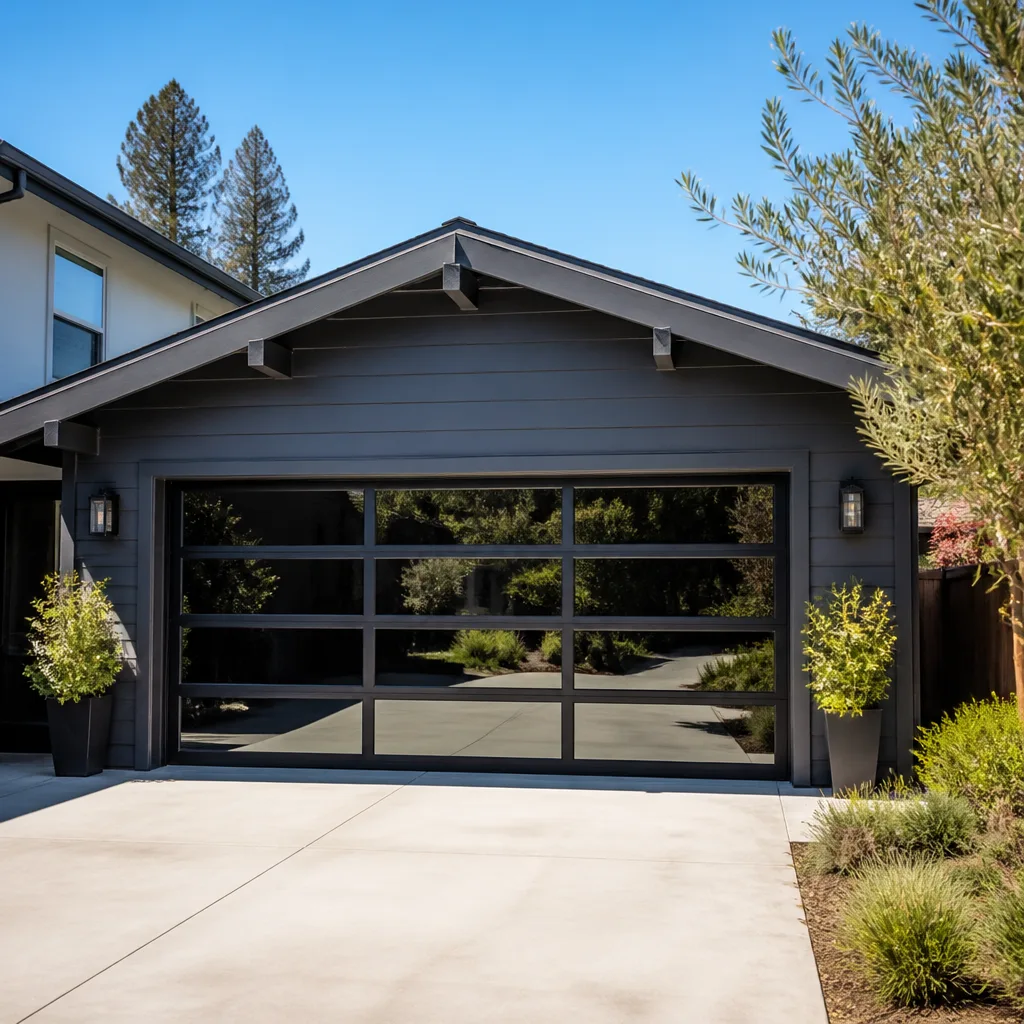 Full-view glass
 LiftMaster openers
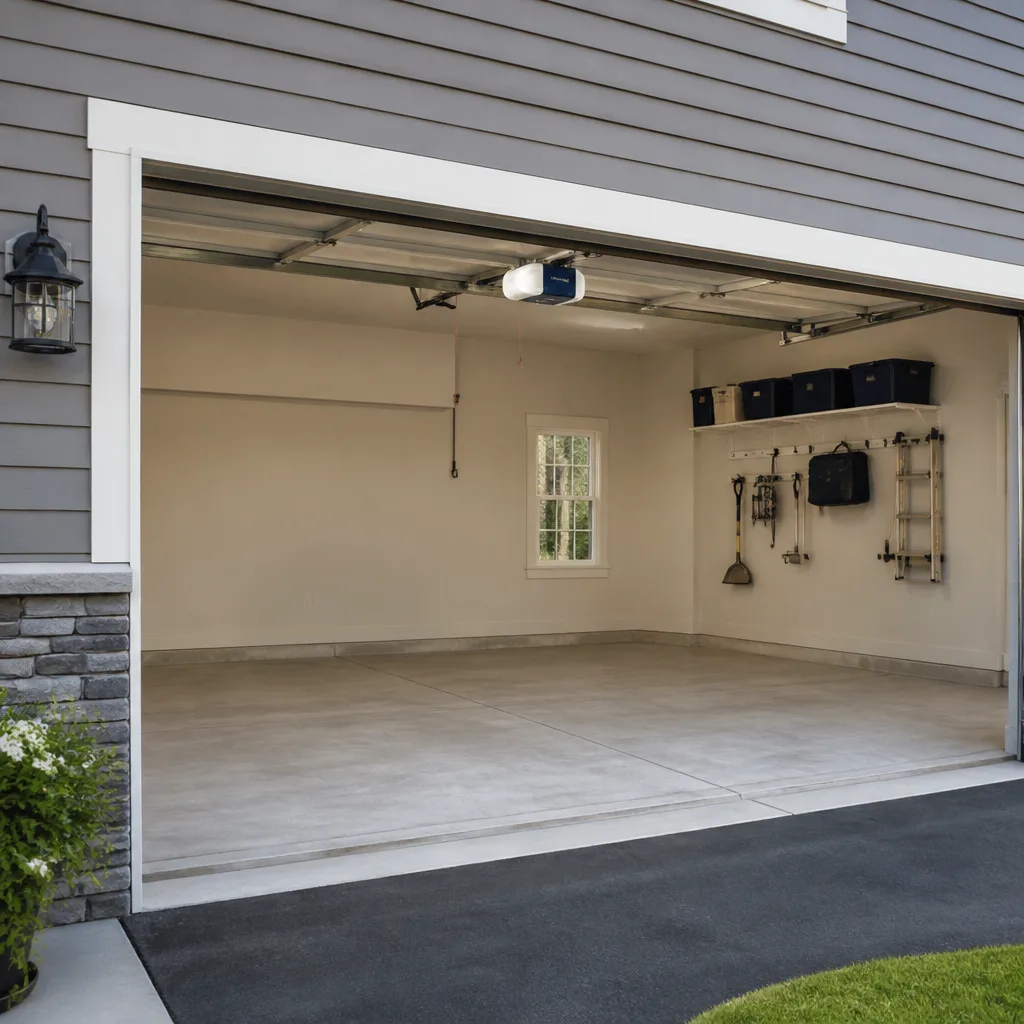 Chamberlain openers
Full 25-point door and opener safety check with every visit - springs, cables, rollers, tracks, and your LiftMaster or Chamberlain opener included
You get a price before we start. It does not change when the pro arrives.
Get your free estimateDIY vs Professional Garage Door: The Corpus Christi Homeowner’s Decision Guide
Most DIY-or-pro guides treat garage door work as one big decision. It isn’t. The real line runs through one component: the torsion spring coiled above your door, holding 150 to 200 pounds of stored tension at rest. On one side of that line sit jobs a careful homeowner can handle with a Saturday morning and a socket set. On the other side sit jobs where the stored energy wins every time. This guide draws that line task by task, covers how Texas warranty rules and Corpus Christi permit questions tilt the math, and gives you a checklist to run before you pick up a wrench.
Quick Answer
DIY is sensible for garage door work that involves no stored tension: replacing weatherstripping, lubricating hinges and rollers, aligning photo-eye sensors, and straightening minor dents in steel panels. Professional help is the right call for anything involving springs, cables, torsion hardware, bent track, or a full door and opener installation, because those parts hold enough force to cause serious injury and because the work can void manufacturer warranties or trigger a city inspection. If your repair sits on the tension side of that list, call a specialist.
Styles & brands we work with
- Raised-panel steel
- Carriage house
- Modern flush
- Full-view glass
- LiftMaster openers
- Chamberlain openers
Table of Contents
- Why the Spring Is the Line, Not Your Skill Level
- The DIY-Safe Tasks: What You Can Genuinely Handle
- The Pro-Only Tasks: Where DIY Becomes Irrational
- Texas Warranty Rules and Your Opener Brand
- Permits, Inspections, and DIY Installation in Corpus Christi
- Cost-Benefit Math: When DIY Saves and When It Backfires
- The Tools and Knowledge Threshold Test
- Common Mistakes to Avoid
- When to Call a Professional
- Frequently Asked Questions
Why the Spring Is the Line, Not Your Skill Level
Homeowners often judge a garage door job by how hard it looks. That’s the wrong test. A torsion spring or extension spring holds a door that weighs a few hundred pounds in balance, and the force stored in that spring is present whether the door is open or closed. When a spring lets go during a DIY replacement, it releases that energy in a fraction of a second, and the winding bars or tools in your hands go with it. That is why garage door springs are considered one of the more hazardous parts of home repair.
The professional side of the trade treats spring work differently for a reason. Trained technicians use proper winding bars, control the tension in measured turns, and know how the door should feel at each stage. Our technicians have up to 15 years of experience with springs, cables, and torsion hardware, and that experience is the whole point. The spring doesn’t care how confident you are.
Two more components sit on the tension side alongside springs. Cables run under extreme load and can snap with the same violence as a spring. Torsion tubes and drums store force through the whole assembly. Any repair that requires you to loosen, wind, unwind, or disconnect those parts belongs with a trained professional. On the other side of the line sit every adjustment and cleaning task that never comes near stored tension.
What the tension line actually separates
- No stored tension involved: weatherstripping, bottom seal, lubrication, sensor alignment, minor panel dents, cleaning and visual checks.
- Stored tension involved: torsion springs, extension springs, cables, drums, torsion tubes, and any repair that requires you to relieve tension to reach the part.
When you sort a repair into one of those columns, the DIY decision usually makes itself. That’s a cleaner approach than asking whether you feel handy today.
The DIY-Safe Tasks: What You Can Genuinely Handle
A handful of garage door jobs are well within reach for a careful homeowner, and paying a professional for them rarely pencils out. Here they are, with what each one involves.
1. Replacing weatherstripping and the bottom seal
The rubber seal along the bottom of your door and the vinyl strips down the sides take a beating from sun and heat. Corpus Christi summers are hard on both. The bottom seal slides out of its aluminum retainer and a new one slides back in, or the whole retainer gets replaced with a few screws. No tension, no heavy lifting. This is one of the most cost-effective fixes you can make, since a worn seal lets water, dust, and pests in.
2. Lubricating hinges, rollers, and the track
A dry door gets loud and stiff before it fails. A garage door lubricant applied to hinges, roller stems, and the bearing plates quiets the door and slows wear. Skip the track surface for the rollers themselves, but wipe the track clean. Five minutes, twice a year.
3. Aligning or cleaning photo-eye sensors
If your door reverses for no obvious reason or won’t close at all, the safety sensors near the floor are usually the culprit. Wipe the lenses, check that both lights are on, and make sure nothing has nudged them out of aim. If the brackets are bent, they can often be straightened or re-mounted with a screwdriver.
4. Straightening minor dents in steel panels
A light dent in a steel panel can sometimes be pressed back with a block of wood and firm pressure from behind. Cosmetic only. If the panel is creased, cracked, or separating at a seam, replacement is the answer, and that’s a professional job because the panel carries spring load.
5. Visual inspections and basic tightening
Walk the door, look and listen. Loose bolts on hinges and brackets get snugged. Worn rollers get noted for replacement. You can catch a lot of early problems this way, and a caught-early problem is a cheaper problem.
That short list covers most of what a homeowner can safely handle. Everything else in this guide sits on the professional side, and for good reason.
The Pro-Only Tasks: Where DIY Becomes Irrational
Some garage door jobs aren’t hard so much as hazardous. Here is what belongs with a trained technician, and why each one carries risk that no amount of confidence offsets.
- Spring replacement. Torsion and extension springs store the door’s weight as tension. Winding or unwinding them without the right bars and the experience to control the release is how people get hurt. A trained technician replaces both springs in a matched pair so the door stays balanced and both wear evenly.
- Cable replacement or adjustment. Cables are under continuous load and can snap without warning. A failed cable can also release a door abruptly. This is not a part to handle without a professional.
- Track replacement or straightening. A kinked track throws the door off its path, and forcing a door past a bent track can bend panels or bind rollers. If the track is damaged, a specialist can usually repair it; if it’s badly bent, replacement is the call.
- Torsion tube, drum, and bearing plate work. These tie directly into the spring system. Any repair here means managing tension first.
- Opening a door that’s stuck off-track. Prying or forcing it almost always causes more damage than it fixes. Stop and call.
- Full door replacement and opener installation. Measuring, ordering the right size, hanging the opener, balancing the door, and setting travel limits is a sequence. It’s also the point where warranty documentation and permits come into play, which this guide covers next.
The honest test isn’t “could I figure this out?” It’s “if this goes wrong, does it go wrong at 150 to 200 pounds of stored force?” If the answer is yes, the repair belongs with a professional. That’s true whether the job is in a Corpus Christi home or anywhere else.
Why spring cost is quoted per spring
When you call for spring work, keep in mind that a spring quote is for one spring. A matched pair costs about twice that, and pairs usually get replaced together because they wear as a set. Ask upfront so the written estimate matches what you expected. Spencer Garage Door Repair sets the price per job by written estimate, and you approve it before any work begins.
Texas Warranty Rules and Your Opener Brand
This is the part most DIY guides skip. Garage door openers and many door systems come with manufacturer warranties, and those warranties often require that installation and certain repairs be performed by a trained technician with documentation. If you replace your own opener, or self-install a new door and drive system, you can void coverage on a system you still rely on every day.
Not every brand enforces the same requirements, and it pays to check your paperwork before you decide. A few common scenarios:
- Opener warranty claims. Some manufacturers tie coverage to professional installation and ask for installer documentation when you file a claim. If you bought a Genie or Chamberlain unit and installed it yourself, read the warranty terms before you count on a replacement gear or control board.
- Door system warranties. Clopay and Amarr both sell door systems with finish and hardware coverage. Self-installation can affect which parts of that coverage apply.
- Repair work under warranty. Replacing a part under warranty usually goes smoother with documentation of who did the install and what part is failing.
We work on what you already have, and that includes knowing each brand’s quirks. A Wayne Dalton door doesn’t balance the same way a Craftsman-era setup does, and the opener in your garage might be a smart-drive unit with its own diagnostic codes. When a homeowner calls about a warranty-sensitive repair, we can talk through what the repair involves so the decision is informed. Our garage door opener repair service covers both mechanical drives and modern connected systems.
If warranty documentation matters to you, and it usually does, have a trained professional do the install and the repair. It’s the difference between a covered fix and a bill you didn’t expect.
Permits, Inspections, and DIY Installation in Corpus Christi
Permit rules vary by city and change over time. In general, most cities require a permit for structural work on a home, and garage door installation and some opener replacements fall into a gray area that depends on what your city’s building department classifies as an alteration. The safe move is to call and ask before you start, not after.
Where a permit is required for a DIY install, the inspection usually happens at the end, after the door is hung and the opener is wired. If something fails the inspection, the homeowner owns the correction, often with the door still on the punch list.
A professional install usually means the installer knows the local permit path and how the work needs to align with it. On a full door and opener replacement, Spencer Garage Door Repair walks through the process with you so you know what to expect. If you’re weighing garage door repair versus replacement, the same permit question applies to any job that changes the door or its structure.
What to ask your city building department
- Does a garage door replacement on my home require a permit?
- Does replacing the opener alone require a permit or inspection?
- Are there inspection steps after the work is complete?
- Does the permit apply to structural changes like a new track layout or header modification?
Those four answers decide whether a DIY install is even realistic in your neighborhood. Get them before you order anything.
Cost-Benefit Math: When DIY Saves and When It Backfires
DIY is a real money-saver on small jobs. On the tension side of the repair list, DIY can create a larger repair bill within a year. Here’s how the math breaks down across common scenarios.
Where DIY genuinely saves money
- Weatherstripping and bottom seals. Materials are cheap and the labor is short. Doing this yourself is almost always the right call, and it keeps rain and heat out of your garage through the Corpus Christi summer.
- Lubrication and sensor cleaning. Minutes of work, no special tools. Skipping it is the expensive version, because a stiff door wears out rollers and hinges faster.
- Visual inspections. Free. The cost of catching a worn roller early is a five-dollar part instead of a bent track.
Where DIY can cost more than it saves
- A botched spring repair. A spring that lets go during installation can bend panels, warp the track, or worse. You pay for the original repair plus the damage it caused.
- A self-installed opener that won’t balance. An opener that fights a badly balanced door wears out faster. You may end up buying a replacement opener and paying for the install you should have started with.
- A self-install that fails inspection. Correction work plus a second inspection adds up to more than a scheduled professional install, and you’re still without a compliant door.
- Voided warranty coverage. A failed part under warranty that gets denied because of a self-install can double the cost of the repair.
The pattern is consistent. DIY pays on jobs that involve no tension and no permit. DIY costs on jobs where a mistake cascades into structural damage, a denied warranty claim, or an inspection failure. If your repair lands on the first side, save the money. If it lands on the second, price the estimate before you decide. Estimates are free.
Our Corpus Christi team handles the tension-side repairs and the installations so you can compare a written quote to what DIY would actually cost you, including the risk.
The Tools and Knowledge Threshold Test
Before you decide, run this checklist. It’s designed to give you a data-driven answer, not an emotional one. If you can check every box for a given job, you’re probably in DIY territory. If you miss more than one, the tension side of the repair list is where that job belongs.
Tools checklist
- Do you own a socket set that fits the bolts on your hinges and brackets?
- Do you have winding bars sized for your torsion springs, if the job involves springs? (If you don’t, the answer to this job is professional.)
- Do you own a ladder tall enough to safely reach the top of the door and the opener rail?
- Do you have a garage door lubricant and a rag for routine upkeep?
- Can you safely lift and support the door if the job requires it? (If you’re not sure, it’s a professional job.)
Knowledge checklist
- Can you describe how your door is balanced and what your springs look like? (Torsion versus extension changes the answer.)
- Do you know whether your repair touches stored tension?
- Have you checked whether your repair affects the opener warranty?
- Have you called your city building department if the job is an install or structural change?
- Do you know the failure mode of the part you’re about to replace, and what it would cost if it failed during the job?
A “yes” across the board usually points to a small job you can do. A “no” on any of the knowledge questions points to a job where the professional route is the less expensive one in the long run. The tools you can buy. Knowing what tension is doing above your head takes experience.
If you want the diagnosis without the DIY, call (866) 389-3763. We answer 24/7. Fast dispatch from 7am to 7pm, Sunday through Friday. Estimates are free, and the price you approve is the price you pay.
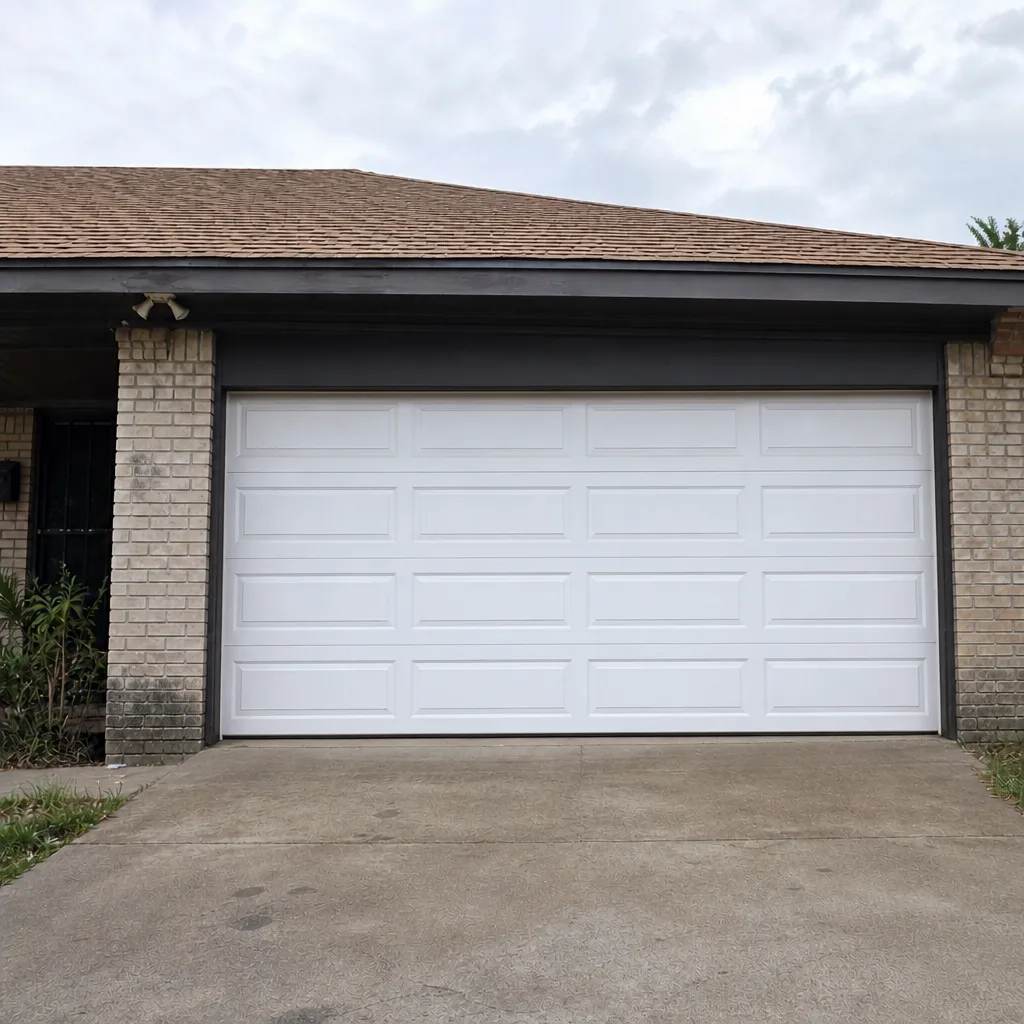
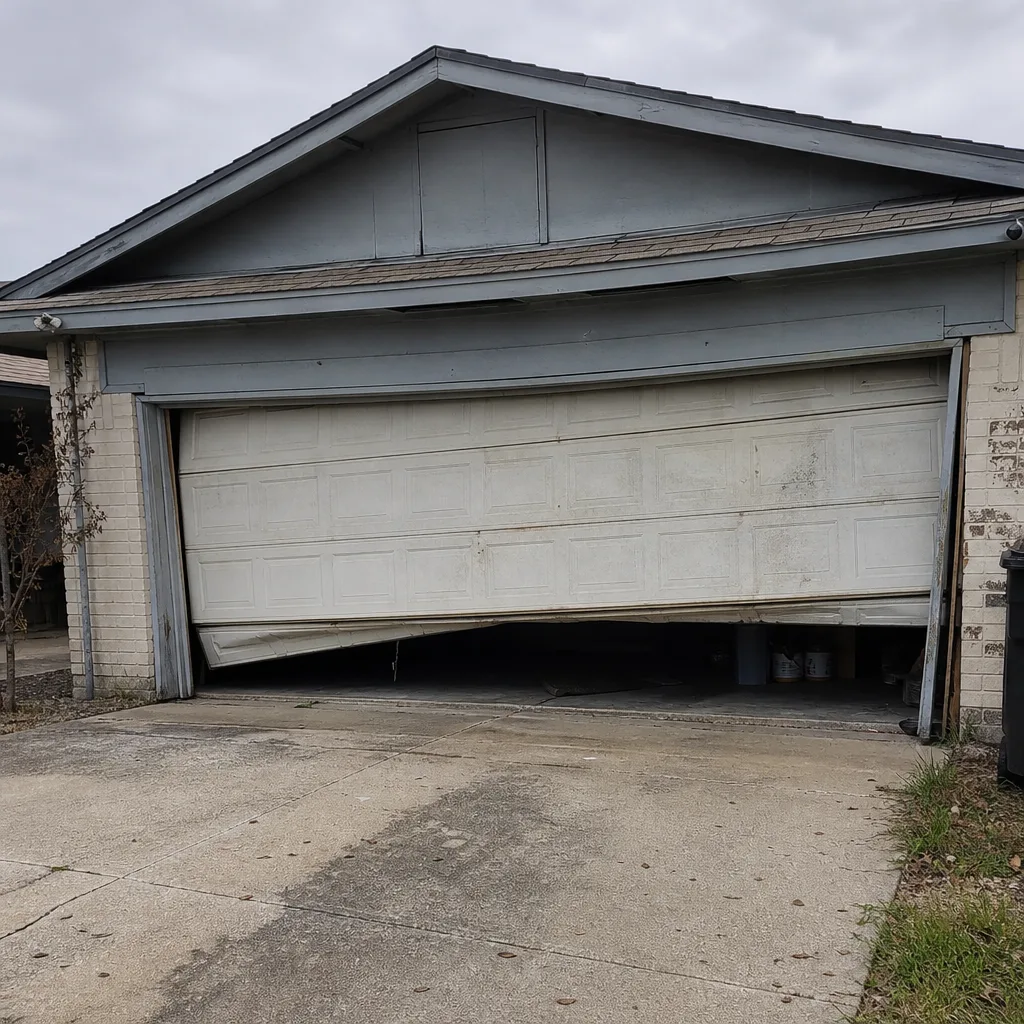
See the difference
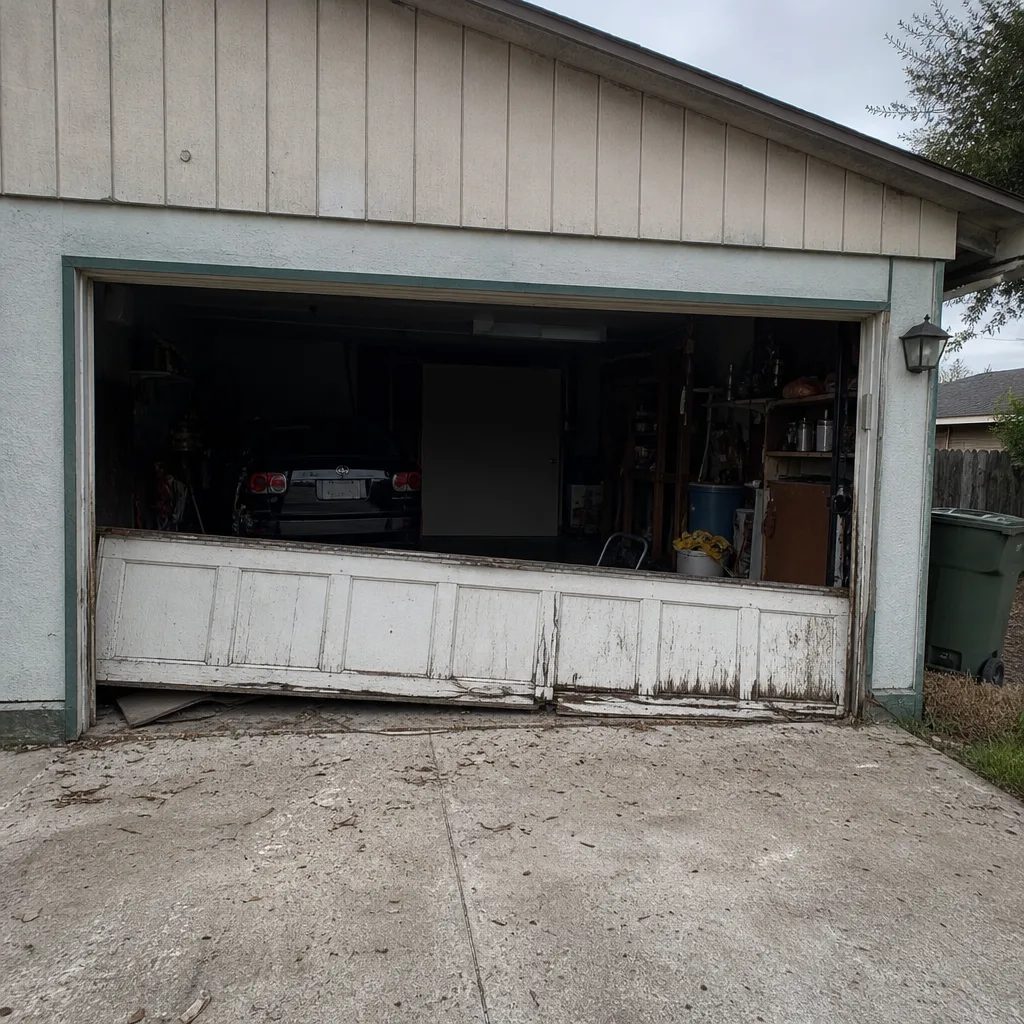 Before
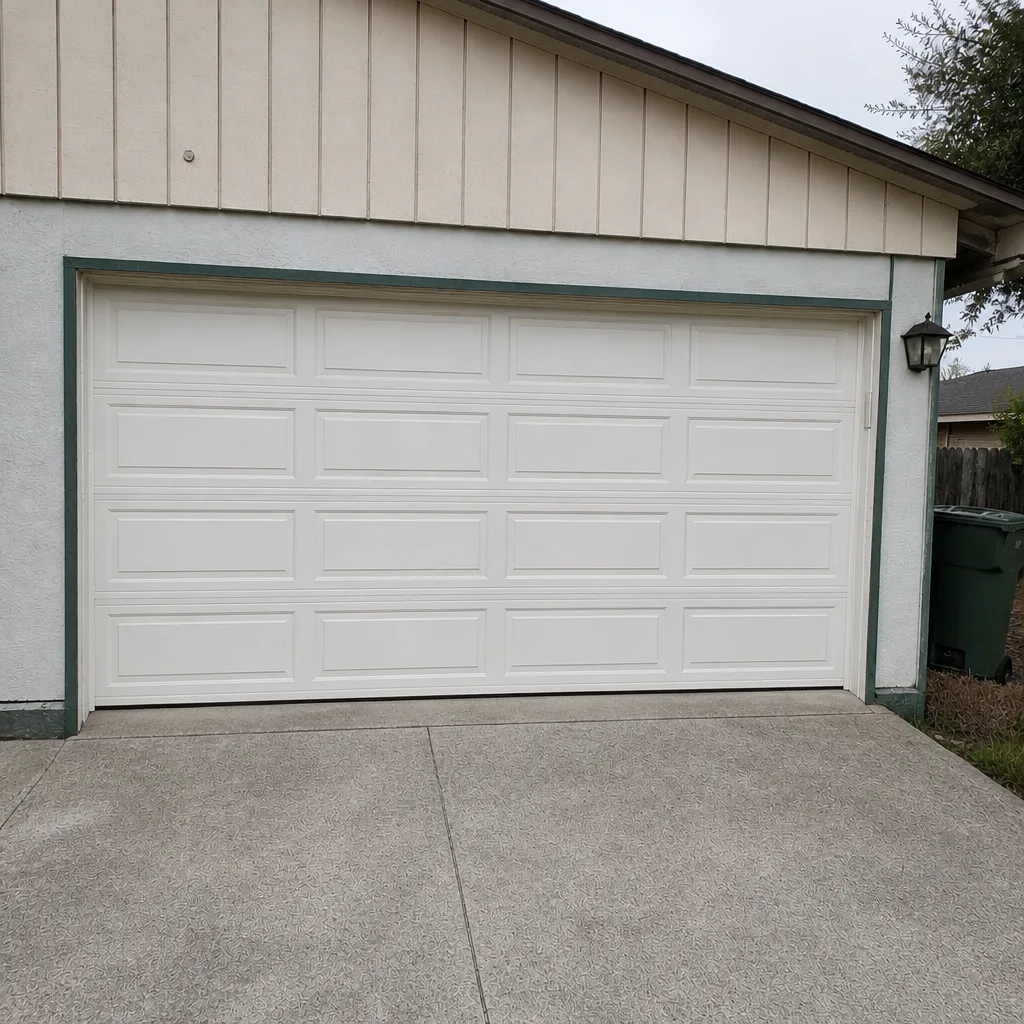 After
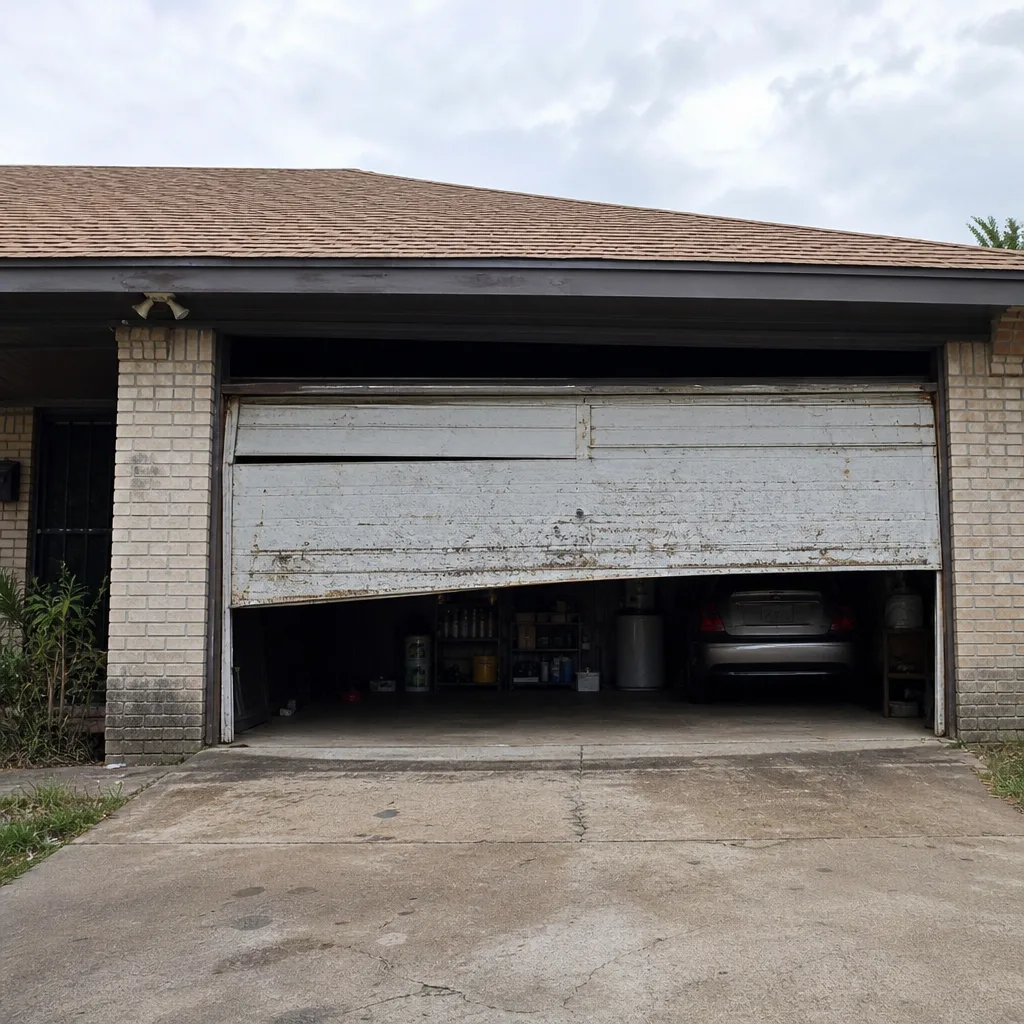 Before
 After
 Before
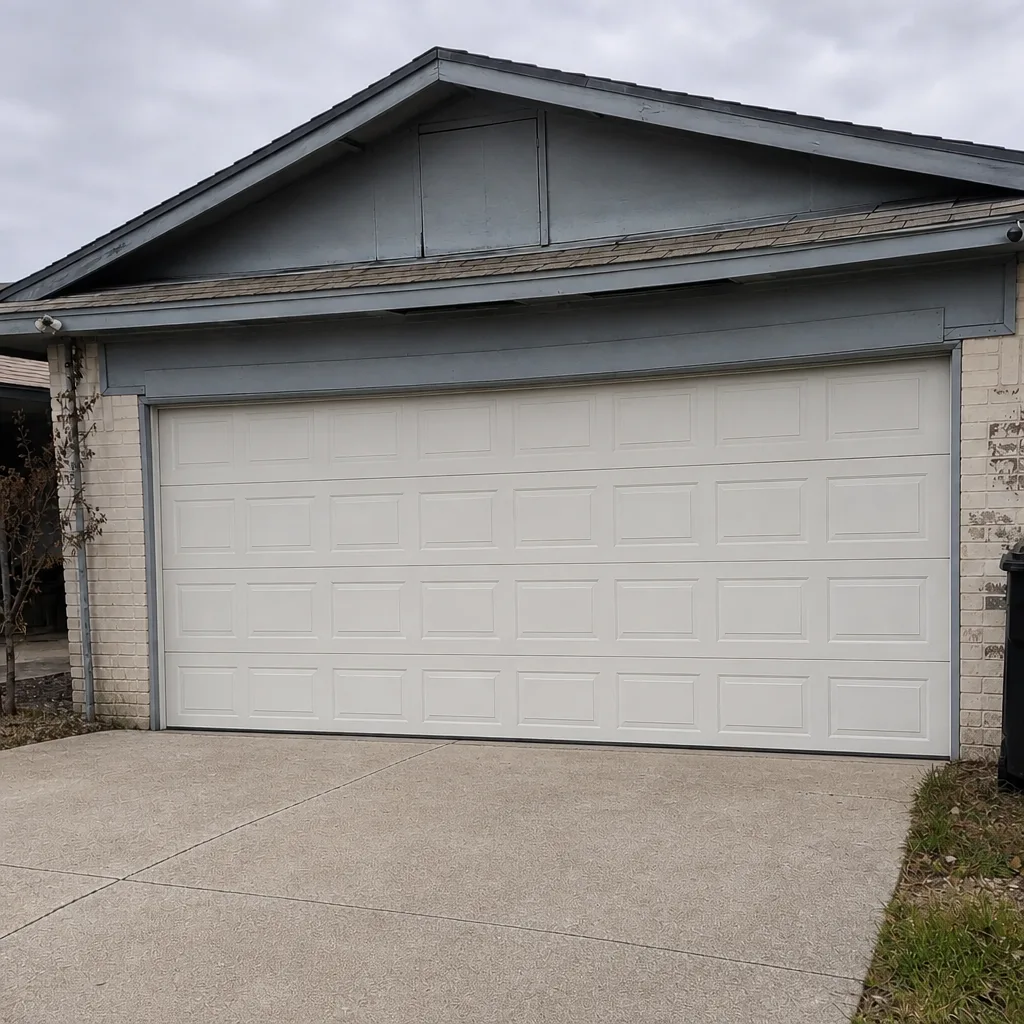 After
Common Mistakes to Avoid
- Trying a spring repair without winding bars. Two people with channel locks is not a safe substitute. If you don’t own the right bars, walk away from the job.
- Replacing one spring when the pair is worn. Matched springs wear together. Replacing one leaves the door unbalanced and the older spring primed to fail next. Replace the pair.
- Forcing a door that’s come off its track. Prying a stuck door usually bends the panels and kinks the track. Stop and call.
- Ignoring the warranty before a self-install. Some opener and door warranties require professional installation documentation. Read the terms before you unbox.
- Skipping the permit call. A quick call to the Corpus Christi building department settles the question before you spend a weekend on an install that needs inspection.
- Replacing a door when an opener repair would fix it. An opener that won’t respond is often a control board, gear, or sensor problem, not a door problem. Diagnose before you replace.
- Using the wrong lubricant on the wrong parts. Grease on the track collects grit. The right garage door lubricant on the hinges, rollers, and bearings is what keeps the door moving.
When to Call a Professional
Call us when the repair touches stored tension or structural hardware. Broken springs, snapped cables, bent track, torsion hardware, and any door that’s come off its rails all belong with a trained technician, because the risk isn’t on your end, it’s in the spring above your head. Call us for a full door or opener replacement, too, since the warranty and permit questions are easier to settle up front and a professional install tends to go smoother than a weekend project.
Spencer Garage Door Repair offers free estimates in Corpus Christi. Our technicians have up to 15 years of experience and work on all major brands, so we’re not pushing you toward a preferred door or opener. We diagnose what’s actually failing, then give you a written price you approve before any work starts. Springs are quoted per spring, and a matched pair costs about twice a single spring. Call (866) 389-3763. We answer 24/7. Fast dispatch from 7am to 7pm, Sunday through Friday.
Frequently Asked Questions
No. Garage door springs store 150 to 200 pounds of tension even when the door is closed, and winding or releasing that tension without professional training and equipment is where serious injuries happen. A trained technician with proper winding bars and experience is the right call for any spring, cable, or torsion repair. Call (866) 389-3763 for a free estimate.
It can. Several opener manufacturers require professional installation documentation for warranty claims, and a self-installed unit can lose partial or full coverage. Check your brand’s terms before you unbox a new LiftMaster or Chamberlain unit. If warranty coverage matters, have a professional install it and keep the documentation.
That depends on how the city classifies the work, and permit rules change. Most cities require a permit for structural changes and some door replacements, so call the city building department before you start. If a permit applies, a professional install usually handles the inspection more smoothly than a DIY job.
Weatherstripping and bottom seal replacement, lubrication of hinges and rollers, photo-eye sensor alignment, and minor cosmetic dent repair are all safe DIY tasks because none involve stored tension. Anything touching springs, cables, or track is a professional job. If you’re not sure which side of the line a repair sits on, ask before you start.
Because a single spring is one part, and matched pairs wear together. When one spring breaks, the pair usually needs replacing so the door stays balanced. So a quote for one spring is for one spring, and a matched pair costs about twice that. We’ll tell you which your door needs before any work starts.
Yes. We service and install across all major manufacturers, including Clopay, Amarr, Wayne Dalton, Craftsman, LiftMaster, Chamberlain, Genie, and Raynor. We aren’t tied to a preferred brand, so the diagnosis is based on what’s actually failing. Call (866) 389-3763 and we’ll talk through what your door is doing.
The Bottom Line
The DIY decision for a garage door in Corpus Christi comes down to stored tension, not skill level. Weatherstripping, lubrication, sensor alignment, and cosmetic dent repair are safe, money-saving DIY jobs. Springs, cables, track, and full installations belong with a trained professional, because the risk isn’t just failure, it’s a larger repair bill within a year, a denied warranty claim, or an inspection failure. Run the tools and knowledge check before you start, call your city building department if an install is on the table, and price the estimate before you decide. If your repair is on the tension side, call a specialist who does this trade every day.
If you’re not sure what’s failing, call (866) 389-3763 for a free estimate. We answer 24/7. Fast dispatch from 7am to 7pm, Sunday through Friday. Spencer Garage Door Repair works on what you already have, and the price you approve is the price you pay.
Written by the team at Spencer Garage Door Repair.