
Last updated November 15, 2026
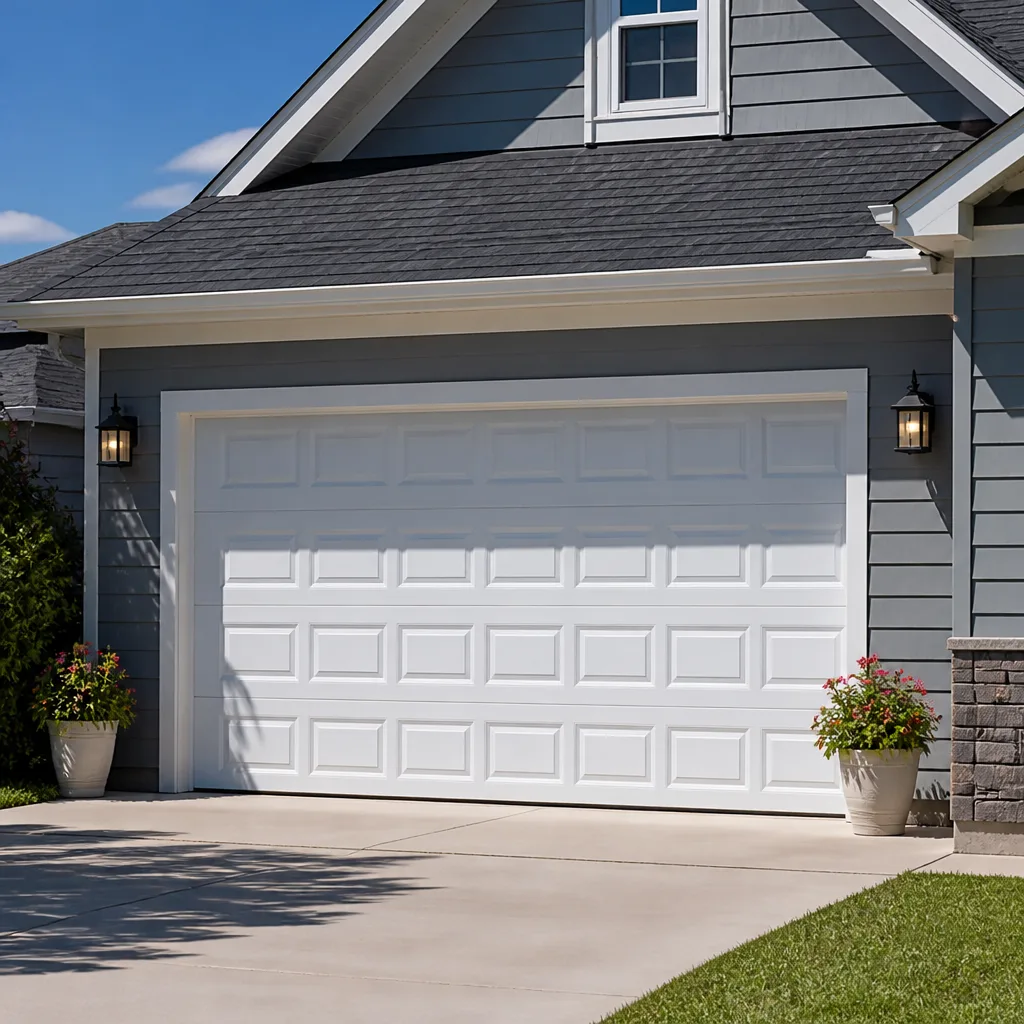 Raised-panel steel
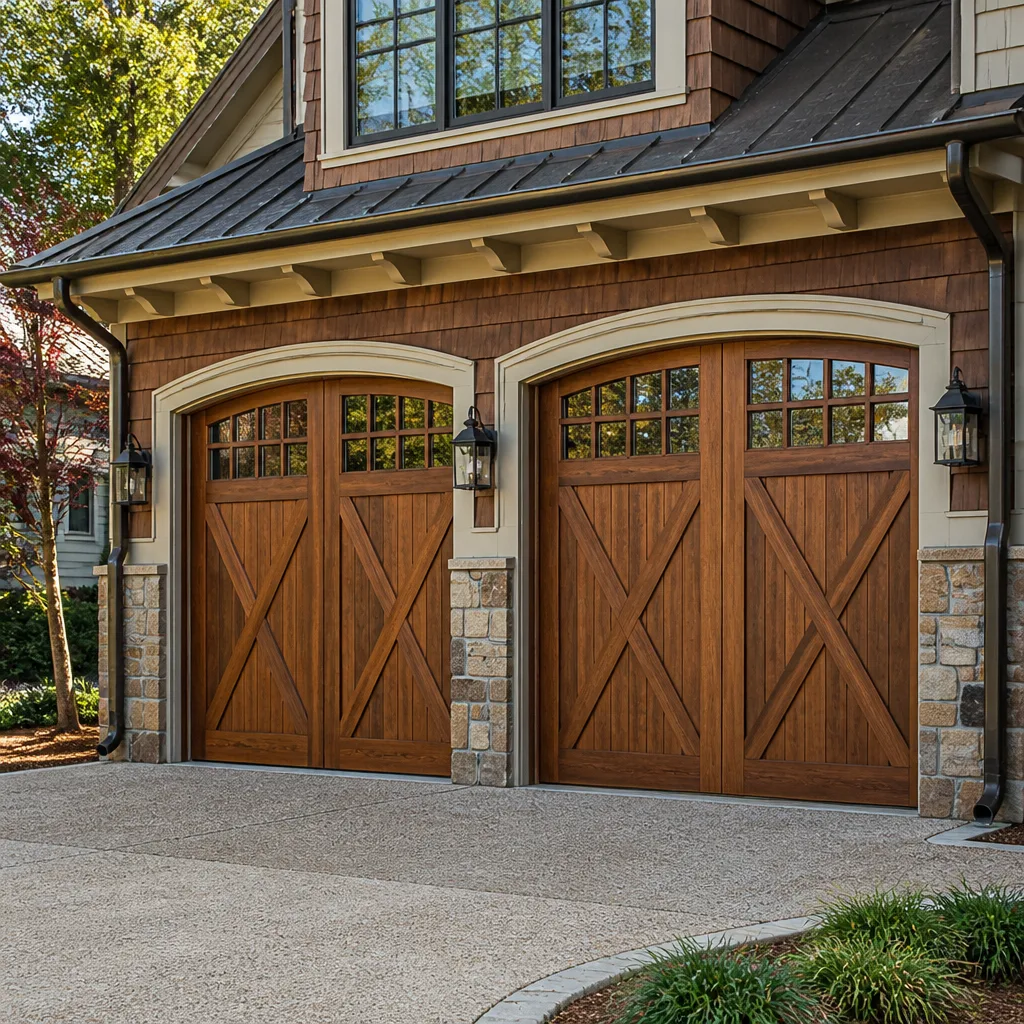 Carriage house
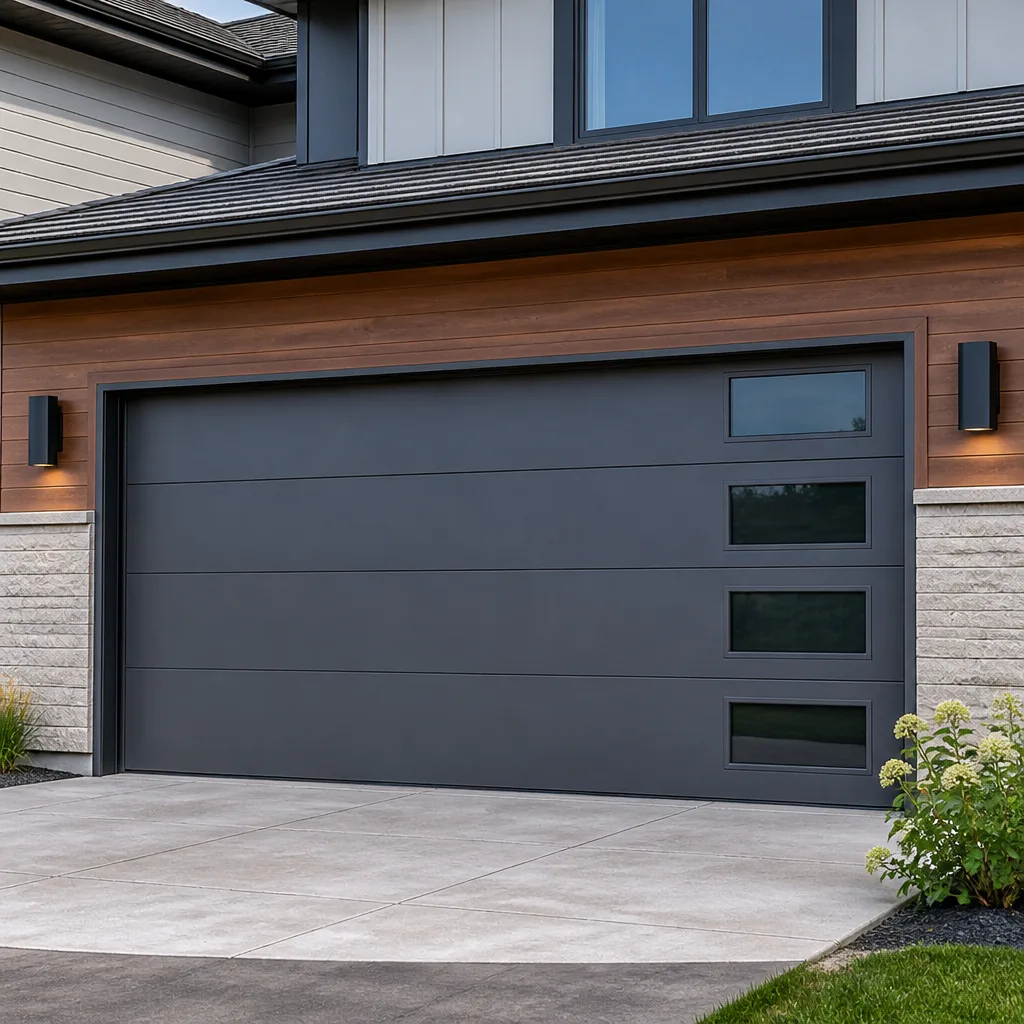 Modern flush
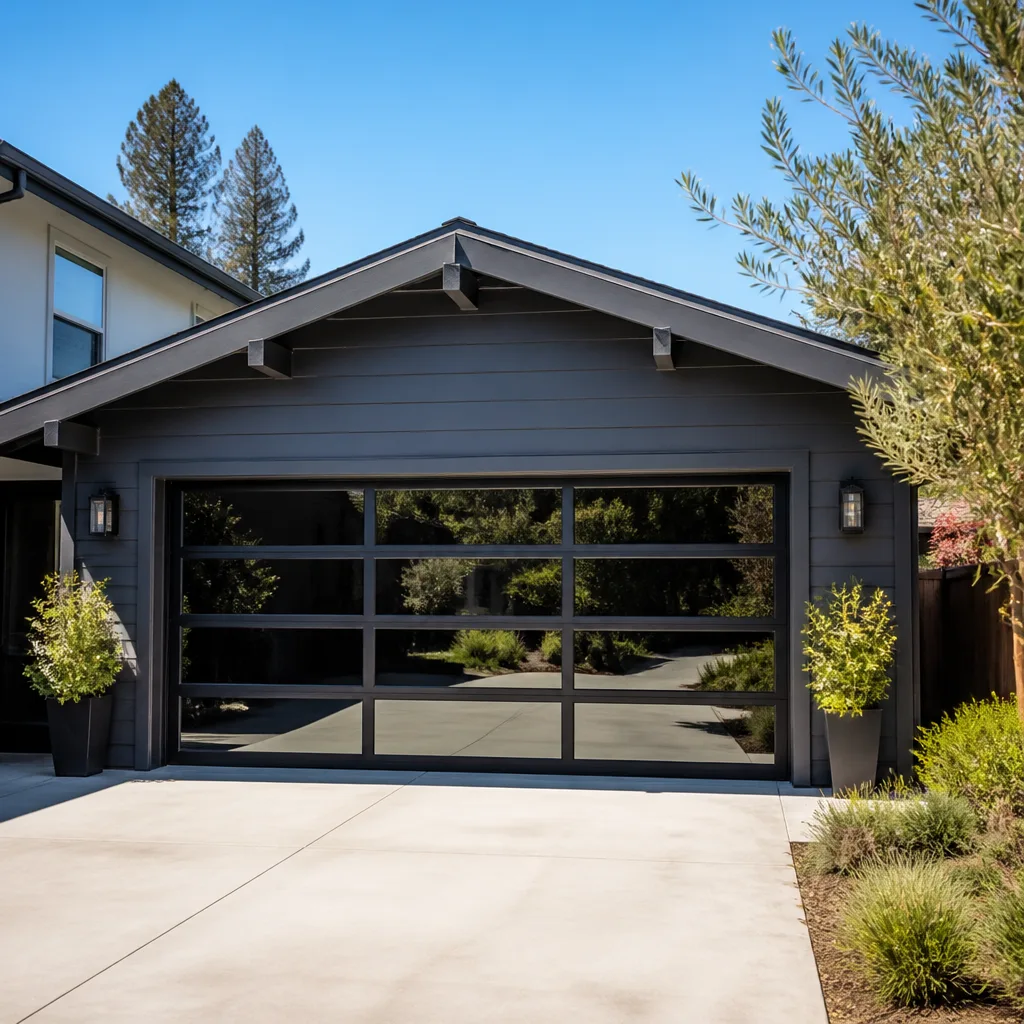 Full-view glass
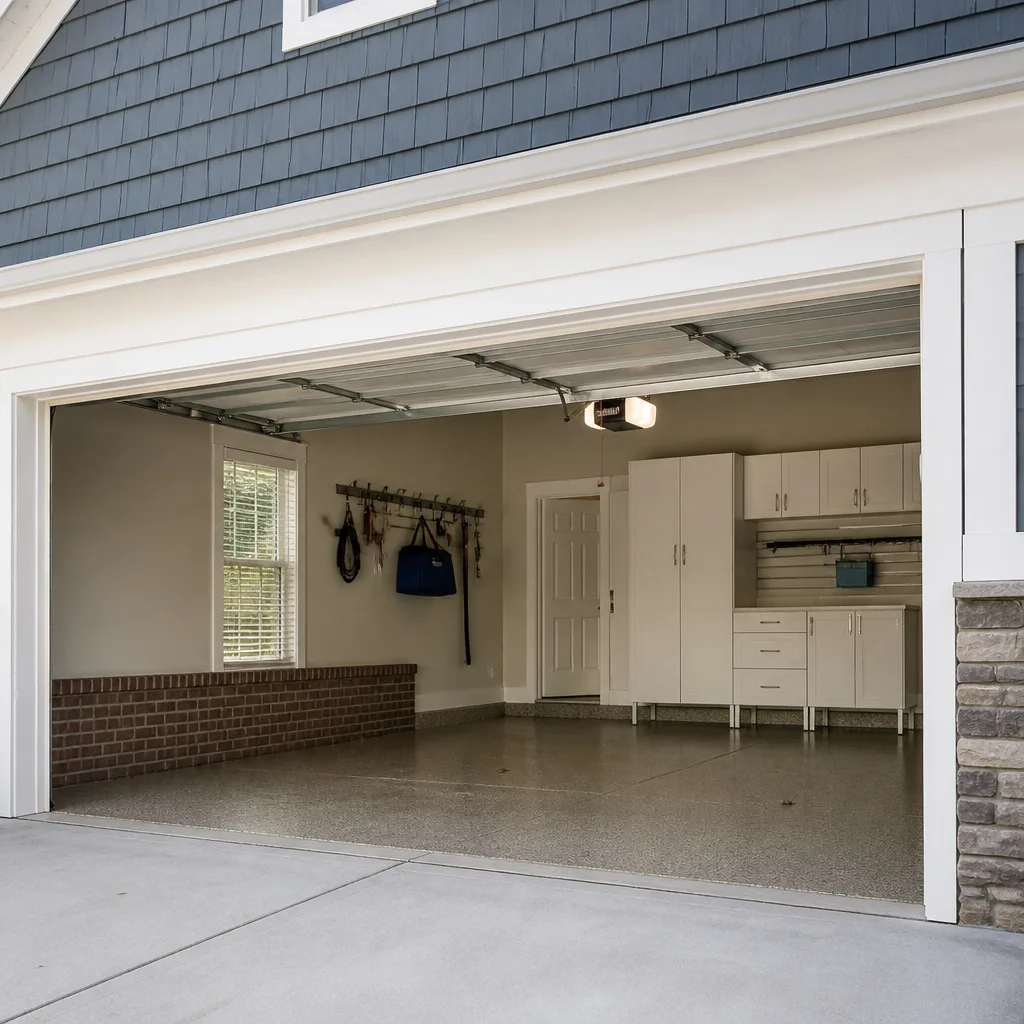 LiftMaster openers
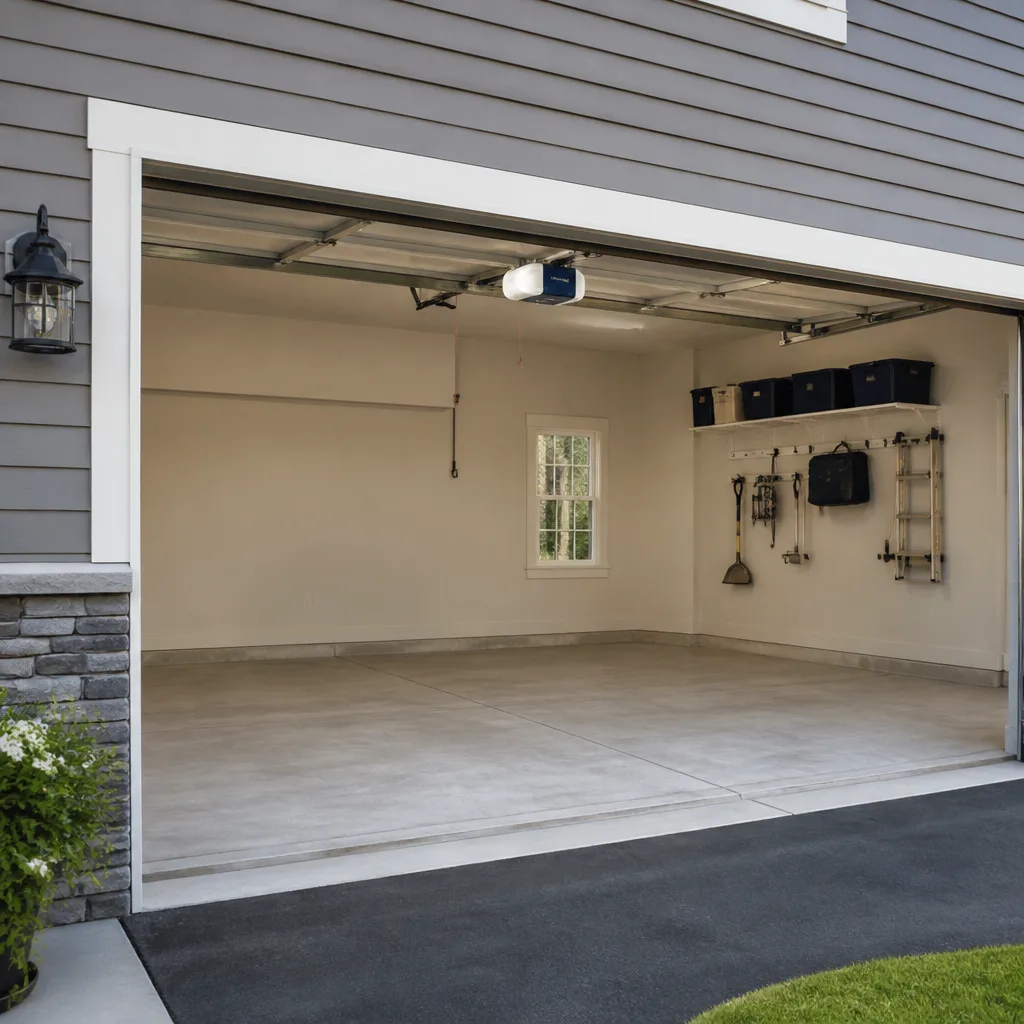 Chamberlain openers
Full 25-point door and opener safety check with every visit - springs, cables, rollers, tracks, and your LiftMaster or Chamberlain opener included
You get a price before we start. It does not change when the pro arrives.
Get your free estimateGarage Door Repair Troubleshooting in Corpus Christi: Common Problems and How to Fix Them
The number-one cause of repeat garage door service calls isn’t a failed part. It’s a correct fix applied to the wrong problem. A door that won’t open can be a broken spring, a misaligned safety sensor, a tired opener motor, or a track that has swollen and grabbed the rollers. Each has a completely different fix, and guessing wrong costs you money twice. Corpus Christi’s humidity adds a wrinkle most troubleshooting guides skip: it changes how and where doors fail. This guide teaches you to read what your door is actually telling you before you touch anything.
Quick Answer
Start by isolating the symptom: does the door not move at all, move partway, make unusual noise, or reverse on its own? A door that won’t budge usually points to a torsion spring, a dead opener, or a power issue. A door that moves halfway and stops points to travel limits or a force setting. A door that reverses immediately points to safety sensors or an obstruction. Read the symptom, match it to the system, then decide whether it’s a safe homeowner adjustment or a job for a trained technician.
Styles & brands we work with
- Raised-panel steel
- Carriage house
- Modern flush
- Full-view glass
- LiftMaster openers
- Chamberlain openers
Table of Contents
- The Symptom-to-System Diagnostic Matrix
- How Gulf Coast Humidity Changes the Way Doors Fail
- Safe Homeowner Fixes vs. Injury-Risk Repairs
- Travel Limits vs. Force Sensitivity: Two Different Adjustments
- Opener Troubleshooting: Remote, Wall Switch, and Motor
- What to Document Before You Call a Technician
- Noise, Vibration, and Safety Reversal Testing
The Symptom-to-System Diagnostic Matrix
Every garage door failure announces itself through a symptom. The skill is mapping that symptom to the right component before anyone spends a dollar. This matrix is the fastest way to narrow the field in your own Corpus Christi garage.
- Door won’t move, opener hums but nothing happens: Likely a broken torsion spring or a stripped opener gear. The motor runs but the door has lost its counterbalance or the drive is slipping.
- Door is dead silent when you press the button: Power, remote battery, wall switch wiring, or a tripped opener logic board. Check the outlet and the breakers before anything else.
- Door starts up, stops partway, then reverses: Safety sensor misalignment, a fogged sensor lens, or a travel limit set too low.
- Door closes then immediately bounces back up: Force sensitivity set too light, or an obstruction in the track or under the door.
- Door is crooked, one side higher than the other: A snapped cable, a wall bracket pulled loose, or a roller jumped the track.
- Grinding, scraping, or squealing: Track rust, dry rollers, worn hinge pins, or the door binding against a swollen frame.
- Door opens fine but won’t close from the remote: Sensor or remote programming issue, not a mechanical failure of the door itself.
Work through the matrix before you call. The answer usually falls out fast. If two or more symptoms overlap, note them all. When you call a garage door specialist, that short list is worth ten minutes of guesswork and helps us get you the right fix. Our technicians have up to 15 years of experience reading exactly these signals, and we work on what you already have, from a LiftMaster opener to a Raynor door.
How Gulf Coast Humidity Changes the Way Doors Fail
Corpus Christi sits in a warm, humid climate, and that changes the failure pattern. Moisture in the air doesn’t break a garage door overnight, but it accelerates wear in three places most generic guides never mention. Understanding this helps you spot trouble early.
Spring corrosion
Torsion and extension springs are steel under constant tension. Humidity causes surface rust, and rust pits the metal. A pitted spring still works, but it fatigues faster and can fail without warning. In Corpus Christi’s climate, springs are worth a visual check every few months. Look for orange or brown discoloration and any flaking. Never try to inspect a torsion spring by hand near its winding bars. That’s a trained-technician job.
Track rust and swollen frames
Metal tracks pick up surface rust along their edges, which drags on the rollers and produces that grinding sound. The wooden or composite frame around the door also swells slightly in humid air. When the frame expands, it can pinch the door and cause it to bind. The telltale sign is a door that opens smoothly in dry weather and hangs up during a humid stretch.
Sensor lens fogging
The photo-eye sensors at the bottom of your track have plastic lenses. In humid Corpus Christi garages, condensation and dust combine on those lenses and scatter the infrared beam. The opener reads that as an obstruction and refuses to close. A dry microfiber cloth on the lens clears it. If it recurs every few weeks, the sensor may be mounted where moisture collects and needs repositioning.
These are the humidity failures we see regularly in Corpus Christi. They’re also why we treat every diagnosis as a system check rather than a single-part swap. Fast diagnosis, lasting fix is the goal.
Safe Homeowner Fixes vs. Injury-Risk Repairs
Some garage door problems are genuinely safe for a careful homeowner to handle. Others are not, and it’s important to know which is which before you start. The line isn’t about skill. It’s about stored energy.
Safe for most homeowners:
- Aligning safety sensors and wiping their lenses
- Testing the safety reversal by placing a roll of paper towels under the door
- Replacing remote batteries and re-pairing remotes to the opener
- Lubricating rollers, hinges, and the opener rail with a proper garage door lubricant
- Clearing debris and obstructions from the track and the door’s path
- Tightening loose bolts on the hinges and brackets that don’t carry spring tension
Not safe, and requiring a trained professional:
- Torsion springs and winding bars. These springs hold enormous stored energy. Touching them with the wrong tool or the wrong technique can cause serious injury. This is the single most dangerous part of any garage door.
- Cables and cable drums. Cables are under hundreds of pounds of tension and can snap with lethal force if released improperly.
- Track replacement and track realignment. The door is heavy and can fall if the track is removed without bracing it first.
- Opener drive gear and internal motor work. The unit needs proper electrical safety and correct reassembly.
Our advice is simple: if the repair involves springs, cables, drums, or the door coming off its track, stop and call a specialist. We’re happy to walk you through the safe stuff over the phone. For the dangerous stuff, we want a trained technician doing it. Garage doors are all we do, and this is why.
Travel Limits vs. Force Sensitivity: Two Different Adjustments
A door that stops partway or reverses is usually showing you one of two adjustment problems. They sound similar but they’re different settings, and adjusting the wrong one makes things worse. Here’s how to tell them apart.
Travel limits: where the door stops
Travel limits tell the opener where “fully open” and “fully closed” are. If your door stops short of the floor, or reverses before it fully reaches the top, the limits are off. This often happens gradually over months as a door settles or a track shifts slightly. The symptom is consistent: the door travels to the same wrong point every time.
Force sensitivity: how hard the door pushes
Force sensitivity is the opener’s safety threshold for how much resistance it accepts before stopping and reversing. If the door reverses on the way down and there’s nothing in the way, the force setting may be too light. If the door crushes against an obstruction instead of reversing, the force setting is too heavy and that’s a safety problem. The symptom is inconsistent: the door stops at different points, or only reverses when it meets a little resistance.
How to tell which one you have
- Watch where the door stops. Same spot every time means limits. Different spot each time means force sensitivity.
- Disconnect the opener (pull the red manual release) and lift the door by hand. If it moves smoothly through the full range, the door is fine and the opener settings need attention. If it binds, the door itself needs service first.
- Check your owner’s manual for the limit and force adjustment procedure. On LiftMaster and Chamberlain units the controls are usually on the back or side of the motor housing. Genie models vary by age. Follow the manual exactly and re-test the safety reversal after every change.
- If adjustments don’t hold, the opener may have a failing logic board or a stripped gear. That’s an opener repair rather than a setting problem.
If you’re not sure which adjustment you’re looking at, call us. A short conversation typically settles it, and if the opener needs internal repair we’ll give you a written estimate before any work begins.
Opener Troubleshooting: Remote, Wall Switch, and Motor
Opener failures are the source of a lot of confusion because the same “nothing happens” symptom has four different causes. Isolating which part of the chain is broken is the first step. This is the diagnostic order we use.
- Try the wall switch, not the remote. If the wall switch works and the remote doesn’t, the problem is in the remote, its battery, or its programming. If neither works, the problem is the opener or its power.
- Check power at the outlet. Use a lamp to confirm the outlet is live. Then check the opener’s internal breaker or fuse if your model has one. A tripped GFCI outlet in a humid garage is a surprisingly common cause.
- Check the safety sensors. A misaligned or blocked sensor will prevent the door from closing even when the opener is fine. Look at the LED indicator on each sensor: solid means aligned, blinking usually means misaligned or obstructed.
- Re-pair the remote. Follow the manual’s pairing procedure. If the remote pairs but still won’t work, replace the battery and try again before assuming the opener is bad.
- Listen to the motor. A hum with no movement points to a stripped gear or a drive problem. Silence points to a logic board or power issue. A clicking sound often means the capacitor or relay is failing.
If the issue lands in the motor or the gear assembly, that’s real opener repair territory. We work across all the major drive systems, including smart and connected openers, and we’re familiar with the quirks of Genie, Chamberlain, LiftMaster, and others. Garage door opener repair is a distinct discipline, not an afterthought, and it’s one of our three core services.
What to Document Before You Call a Technician
A few minutes of documentation can turn a full service visit into a fast diagnosis. More importantly, it helps a technician bring the right parts and give you a real estimate over the phone. Here’s what to capture before you call.
- Photograph the door and the opener. A full shot of the door from outside and a clear shot of the opener’s model label. The label usually lists the brand, model number, and manufacture date.
- Photograph the springs. Take a photo of the torsion bar above the door or the extension springs along the sides. Note the color if there is one; springs are often color-coded by size.
- Note the exact symptom. Does it fail every time or intermittently? Does it fail on open, close, or both? Does temperature or humidity seem to affect it?
- Record any sounds. A short phone video with sound is worth a page of description. Grinding, humming, clicking, and squealing each point to different components.
- Check the sensors. Note whether each sensor’s LED is solid or blinking. This alone rules out a whole category of problems.
- List the brand. Write down the door brand (Clopay, Amarr, Wayne Dalton, Raynor) and the opener brand separately. They’re often different, and knowing both helps match parts.
Don’t try to force the door open or closed to demonstrate the problem. If the spring is already broken, forcing the door can damage the panels, the track, or you. Leave it in its current position and let a technician assess it safely.
With photos and a symptom list in hand, a call to Spencer Garage Door Repair gets you a faster, more accurate answer. We can often tell you whether it’s a one-visit repair or a bigger job before we arrive. And unlike general handyman companies, we don’t guess: every job is a garage door job, so our diagnosis is focused.
Noise, Vibration, and Safety Reversal Testing
Noise is the earliest warning a garage door gives you. Ignore it and you’ll be dealing with a bigger repair later. The key is knowing which noises are cosmetic and which signal a real problem.
Common noises and what they mean
- Squeaking or squealing: Usually dry rollers or hinge pins. Lubrication often fixes it. In a humid Corpus Christi garage, this happens faster than in dry climates.
- Grinding: Metal-on-metal contact. Often track rust or a roller that’s failing. Grinding that gets worse over a few days deserves a professional look.
- Banging or popping: A spring issue, a loose panel, or a cable that’s slipping. The popping of a failing torsion spring often comes just before it breaks.
- Rattling: Loose bolts or a worn opener rail. Usually a simple fix, but worth tightening before the vibration loosens more fasteners.
Test the safety reversal every month
Place a roll of paper towels on the floor in the door’s path and press the close button. The door should reverse immediately on contact. If it doesn’t, the force setting is too high or the sensors are failing. That’s a safety issue, not a nuisance. A door that won’t reverse on contact can injure a child, a pet, or damage a vehicle.
While you’re at it, test the photo-eye sensors. Wave an object between the sensors while the door is closing. It should reverse. If either test fails, stop using the opener until it’s repaired. For anything beyond a sensor adjustment, call a professional. Reversal failures often trace back to the force setting or the opener logic, and those are repairs, not settings.
Common Mistakes to Avoid
- Blaming the opener for a broken spring. If the door is heavy and the opener hums without lifting it, the spring is the likely culprit. Replacing the opener won’t fix a door that’s lost its counterbalance.
- Forcing a stuck door. Pushing a door with a broken spring can bend panels, snap a cable, or cause the door to fall. Leave it where it stopped and call for help.
- Adjusting force sensitivity to “fix” a reverse problem. Turning up the force to make a door close is the most dangerous mistake on this list. It defeats the safety mechanism. Find the real obstruction instead.
- Using the wrong lubricant. WD-40 and similar products attract dust and gum up the track. Use a proper garage door lubricant on rollers, hinges, and the opener rail.
- Ignoring sensor lens fogging. In Corpus Christi’s humid air, fogged sensor lenses cause repeated false obstructions. Wipe them dry before assuming the sensors are broken.
- Trying to wind a torsion spring. This is the single most dangerous repair a homeowner can attempt. There’s no safe DIY version. Never do it.
- Letting a minor noise go. A squeak is cheap to fix. A seized roller that damages the track is a much bigger job. In a humid Corpus Christi garage, small problems turn into big ones quickly.
See the difference
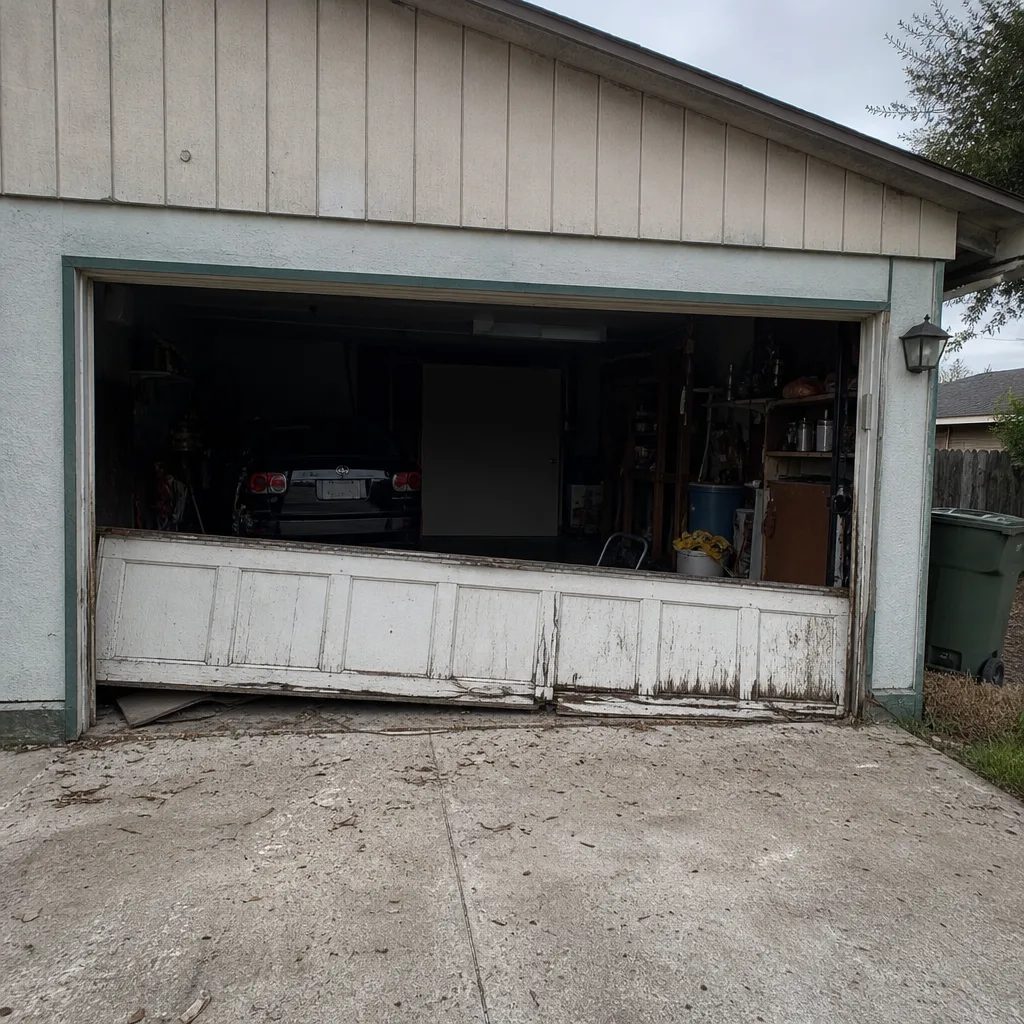 Before
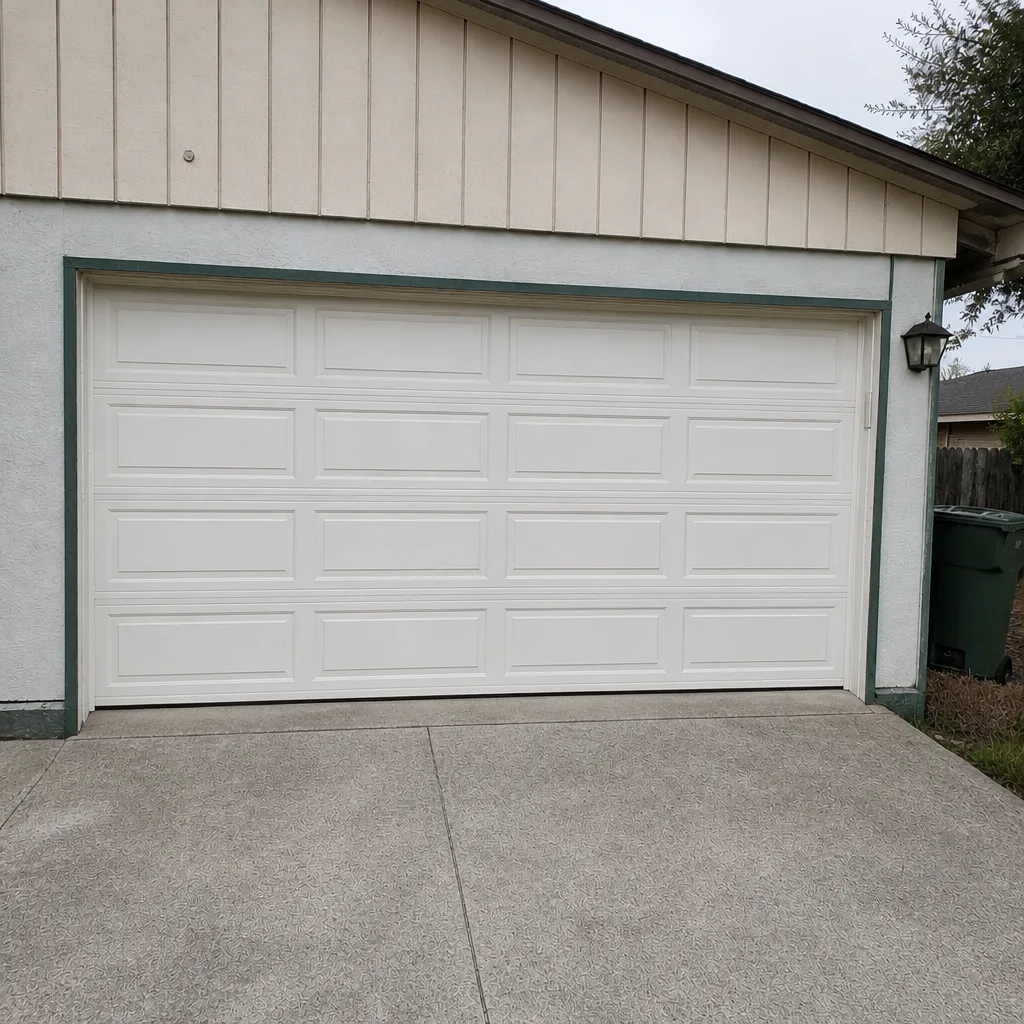 After
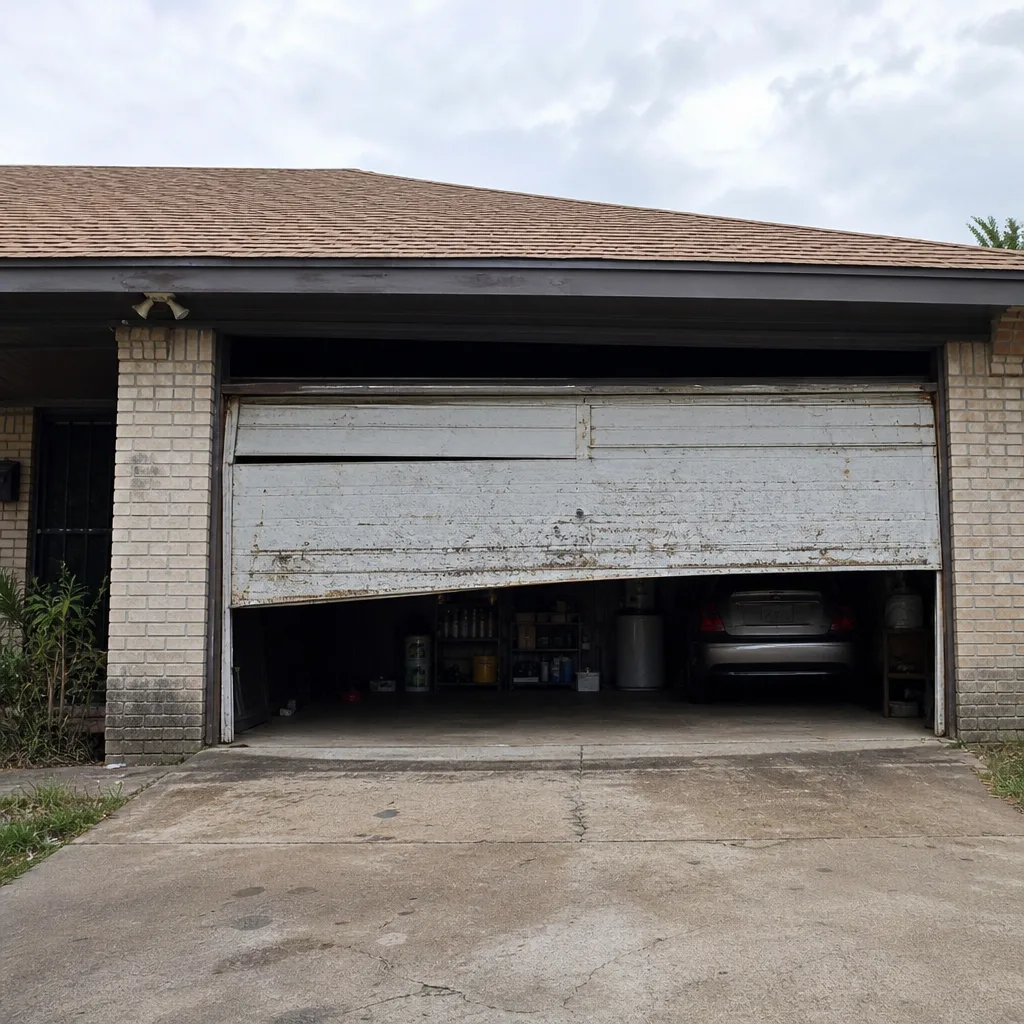 Before
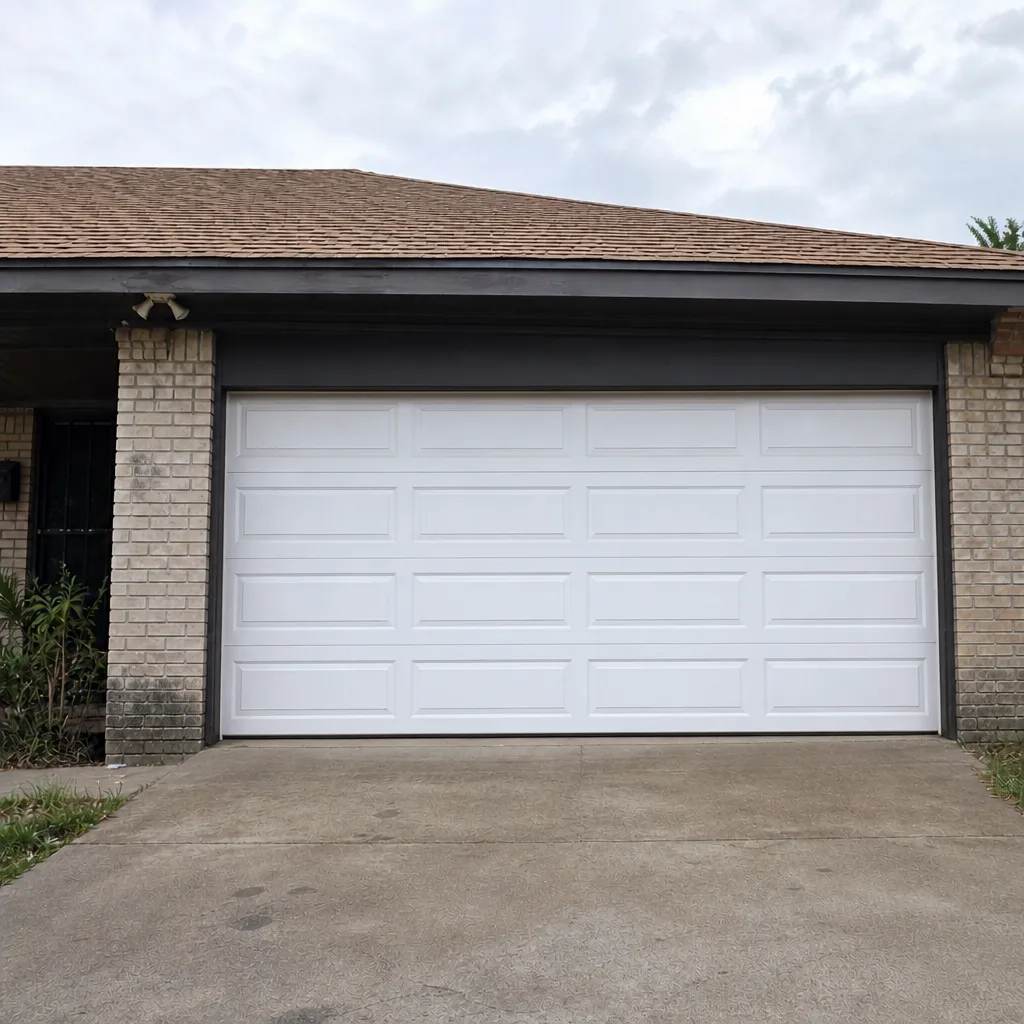 After
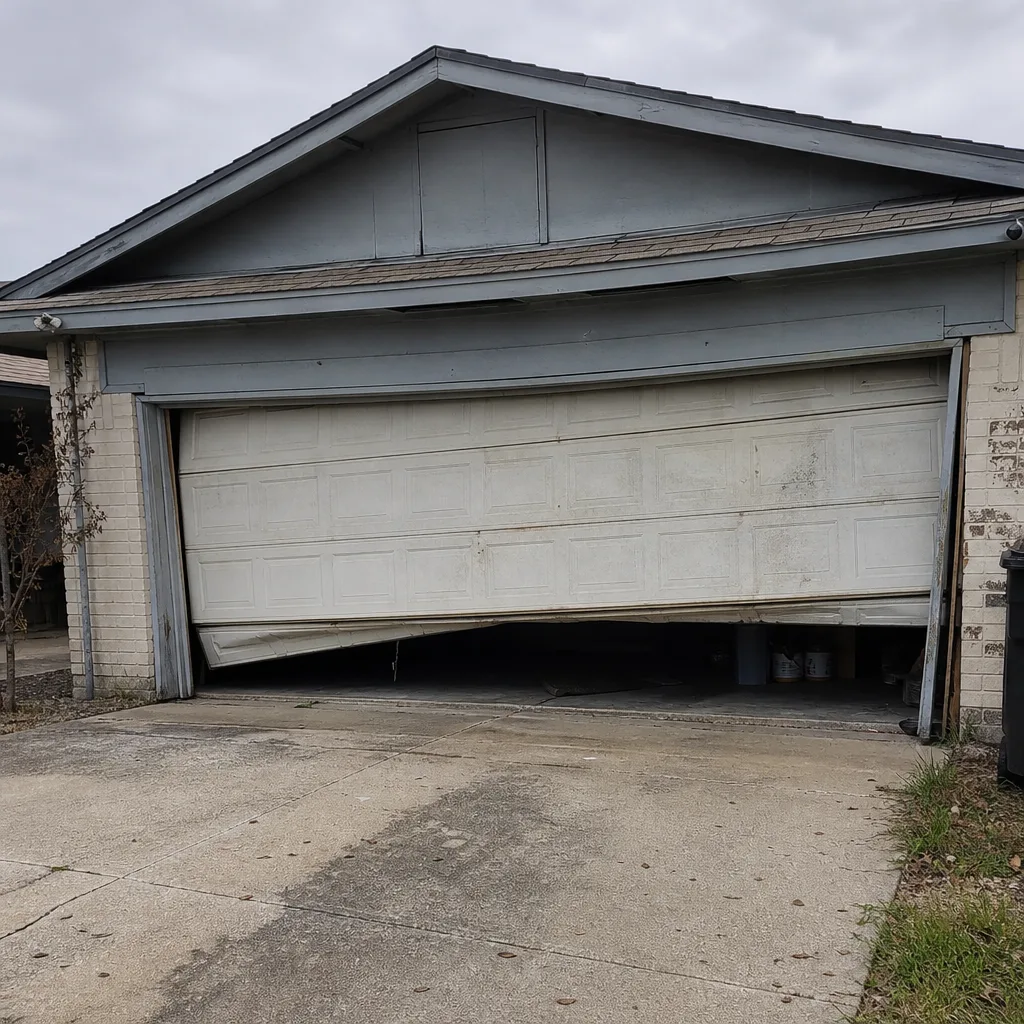 Before
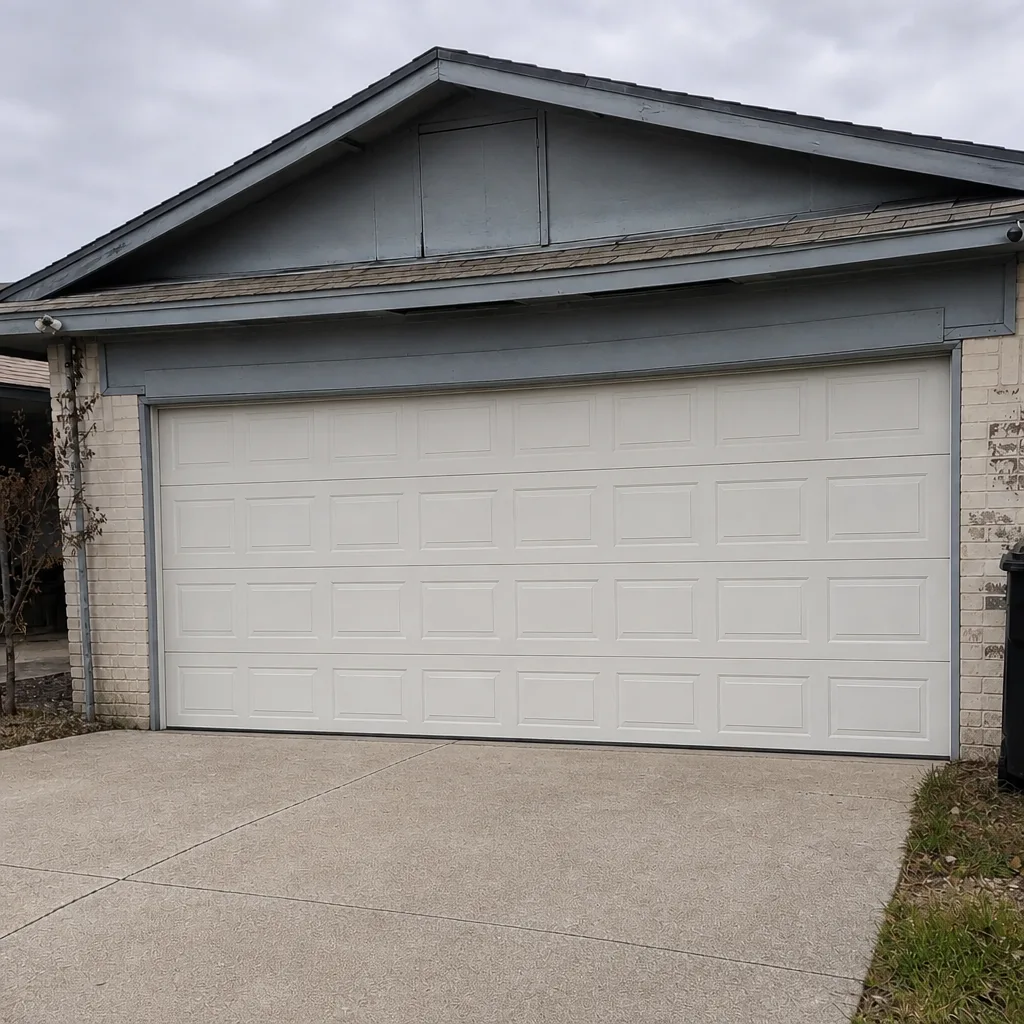 After
When to Call a Professional
Call a professional when the repair involves a spring, a cable, a cable drum, or a door that has come off its track. Those jobs carry genuine injury risk and should always be handled by a trained technician. Call us when your opener needs internal repair, when a door is crooked or hanging unevenly, or when a “setting” adjustment doesn’t hold after two tries. Call us if you hear popping, banging, or grinding that gets worse over a few days. And call us if you’re just not sure what you’re looking at; a short conversation is often the fastest path to the right fix. Spencer Garage Door Repair offers free estimates in Corpus Christi. Call (866) 389-3763. We answer 24/7. Fast dispatch from 7am to 7pm, Sunday through Friday.
We handle the full range of repairs, from a broken spring to a stripped opener gear, along with new door and opener installation. If you want a broader overview of what we do, see our garage door repair service page. For electronic and smart-drive issues specifically, our garage door opener repair page goes deeper. And for a sense of the area we cover, our Corpus Christi page has the details.
Frequently Asked Questions
Most common repairs in Corpus Christi fall into a moderate range typical of the local market, and the written estimate you get before work starts sets the final price. We quote per job, so the cost depends on what’s actually broken: a sensor adjustment is very different from a spring replacement. There are no hidden fees, and the price is agreed before any work begins. Call (866) 389-3763 for a free estimate.
We often can, for repair jobs. Same-day service is available depending on the day’s schedule, and we dispatch fast from 7am to 7pm, Sunday through Friday, so call early if you can. We’re closed Saturday. If you call outside dispatch hours, we’ll book you into the next opening. Call (866) 389-3763 and we’ll tell you what’s available.
No. We quote the job based on what we actually find, and you approve the written estimate before any work starts. If a repair turns out to be more involved than the diagnosis suggested, we’ll explain why and get your approval before proceeding. You never get a surprise invoice. Call (866) 389-3763 for a free estimate.
Yes. We’re licensed and insured, and our technicians have up to 15 years of experience working on the major brands, including LiftMaster, Chamberlain, Genie, and Raynor. We’re a dedicated garage door specialist, not a general handyman company, so every job we take is a garage door job. Call (866) 389-3763 with any questions before you book.
If the door closes and immediately bounces back up with nothing in the way, the most likely causes are misaligned safety sensors, fogged sensor lenses, or a force sensitivity setting that’s too light. In Corpus Christi’s humidity, moisture on the sensor lenses is a common trigger. Wipe the lenses, check the sensor LEDs, and test again. If it still reverses, call (866) 389-3763; it may be a force or logic problem that needs a technician.
It depends on the age of the unit and the nature of the failure. A stripped gear or a failing capacitor on a LiftMaster or Chamberlain is often worth repairing. A logic board failure on an older unit, or repeated failures in a short window, often points toward replacement. We’ll give you a straight answer and a written estimate for both options so you can decide. Call (866) 389-3763 for a free estimate.
The Bottom Line
Most garage door troubleshooting comes down to reading the symptom before you spend money. Match what you see and hear to the system at fault. A door that won’t move points to the spring or opener. A door that stops partway points to limits. A door that reverses points to sensors or force. Corpus Christi’s humidity accelerates rust, dragging, and sensor fogging, so those checks matter more here than in drier climates. Handle the safe adjustments yourself, but leave springs, cables, and openers to a trained technician. Take a few photos, note the brand, and call a specialist early. Fast diagnosis, lasting fix beats guessing every time.
If your door is showing any of the symptoms in this guide, we can help. Spencer Garage Door Repair is a dedicated garage door specialist serving the area through Spencer Garage Door Repair. Most brands. One specialist. Call (866) 389-3763 for a free estimate. We answer 24/7. Fast dispatch from 7am to 7pm, Sunday through Friday.
Written by the team at Spencer Garage Door Repair.