
Last updated November 15, 2026
 Raised-panel steel
 Carriage house
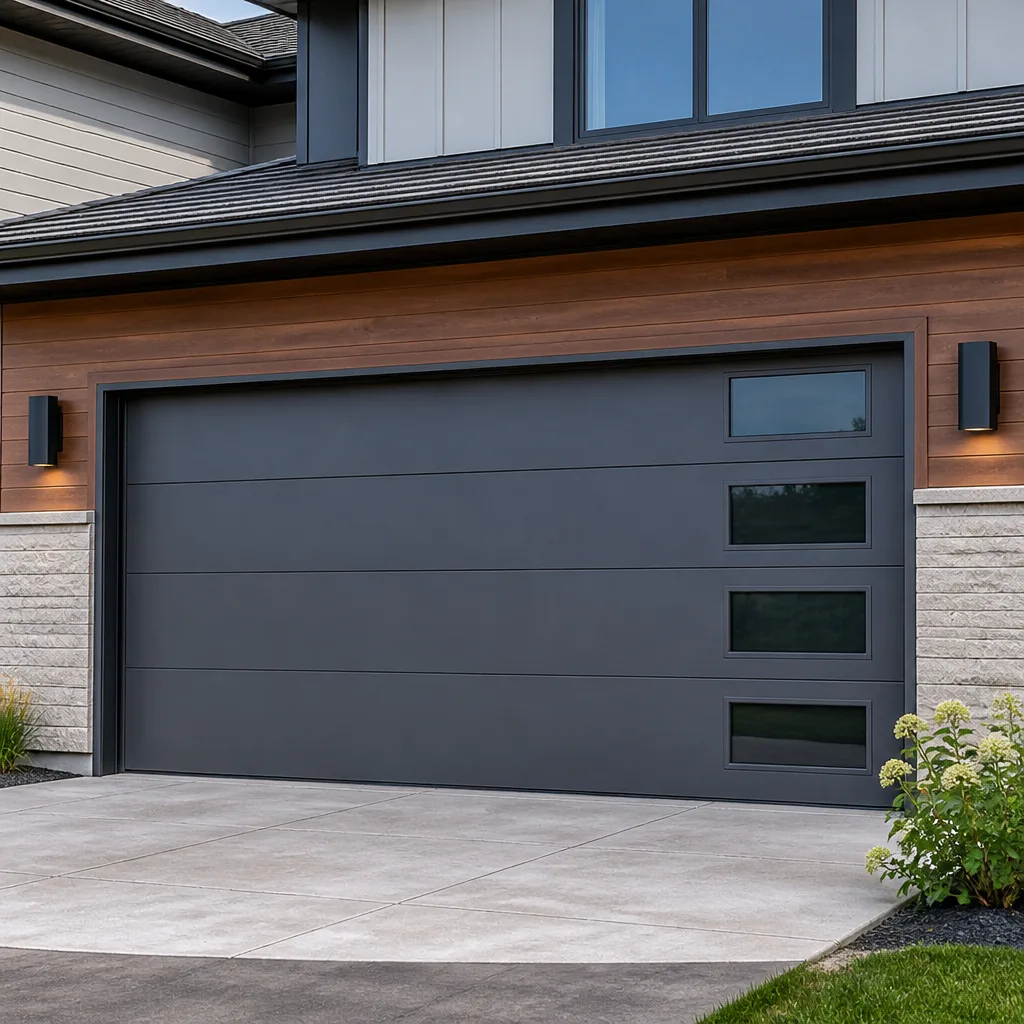 Modern flush
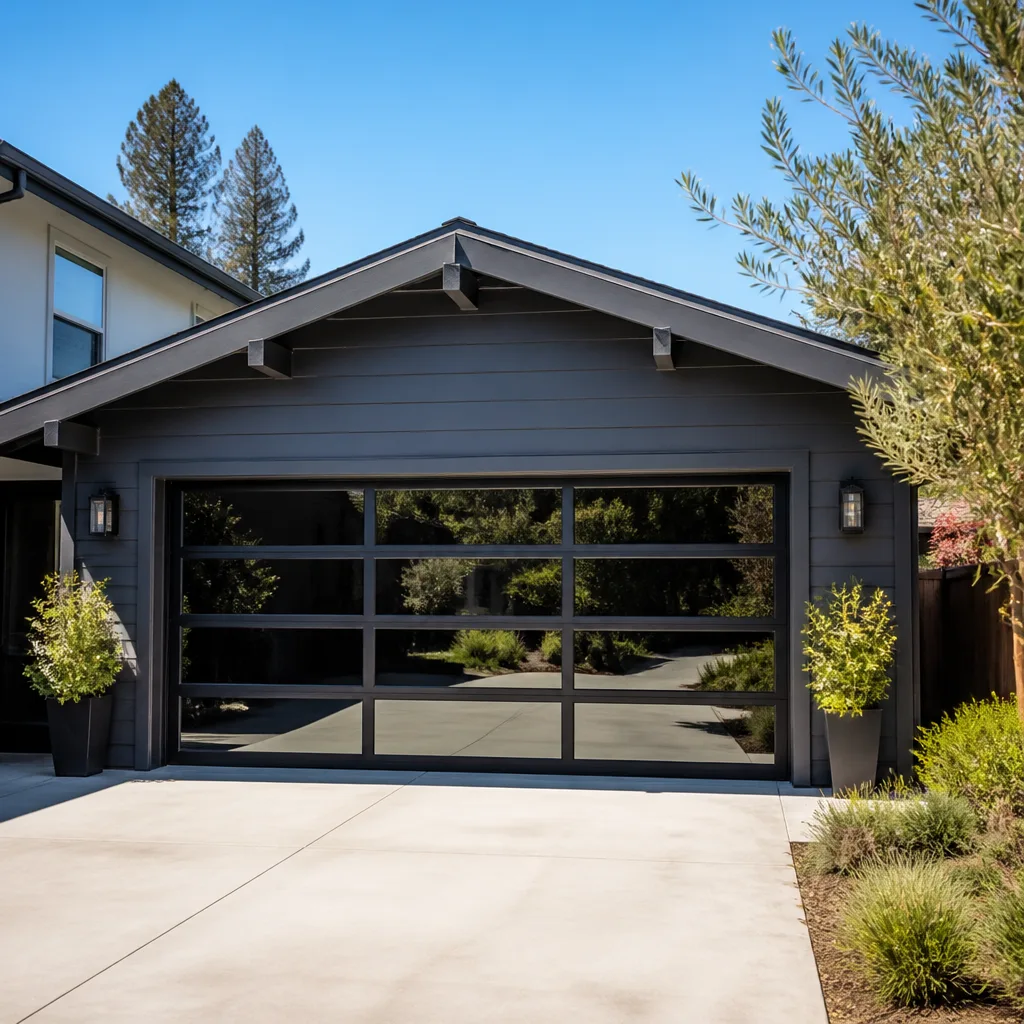 Full-view glass
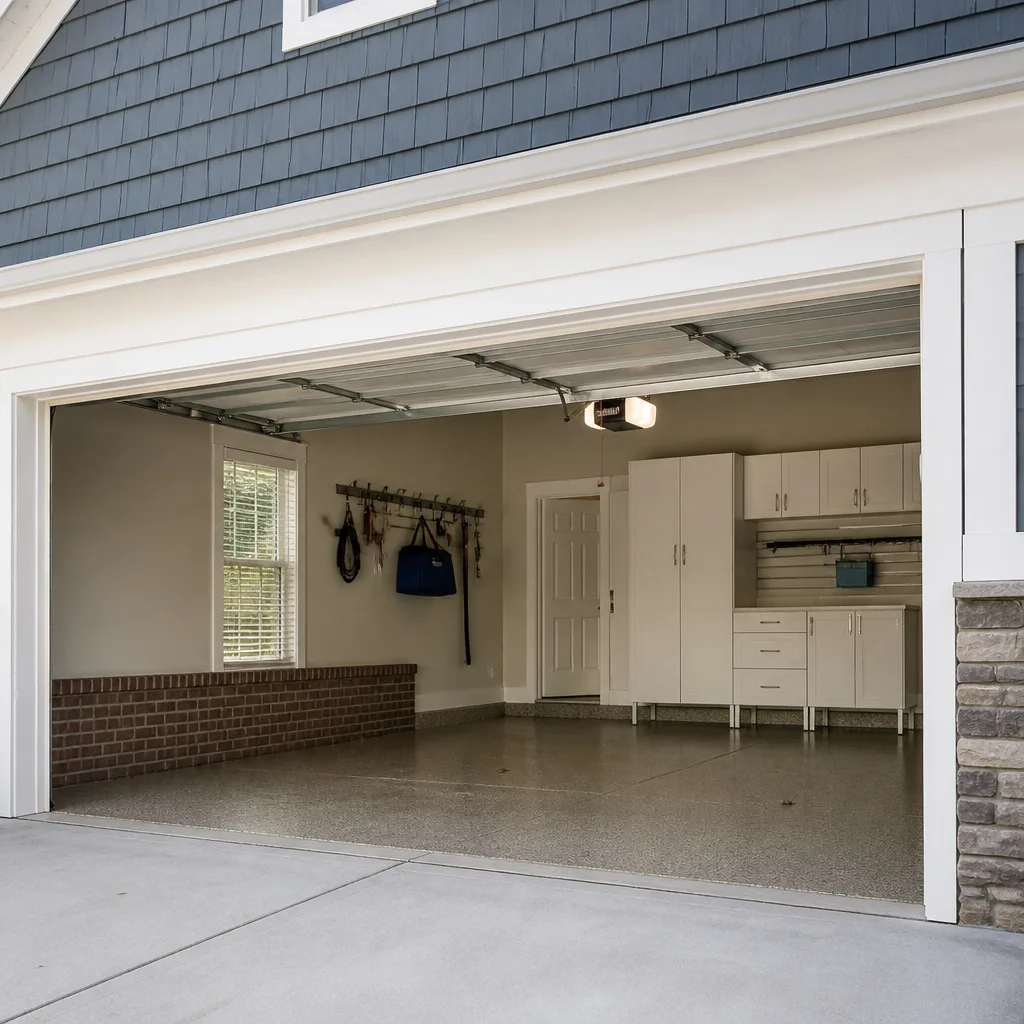 LiftMaster openers
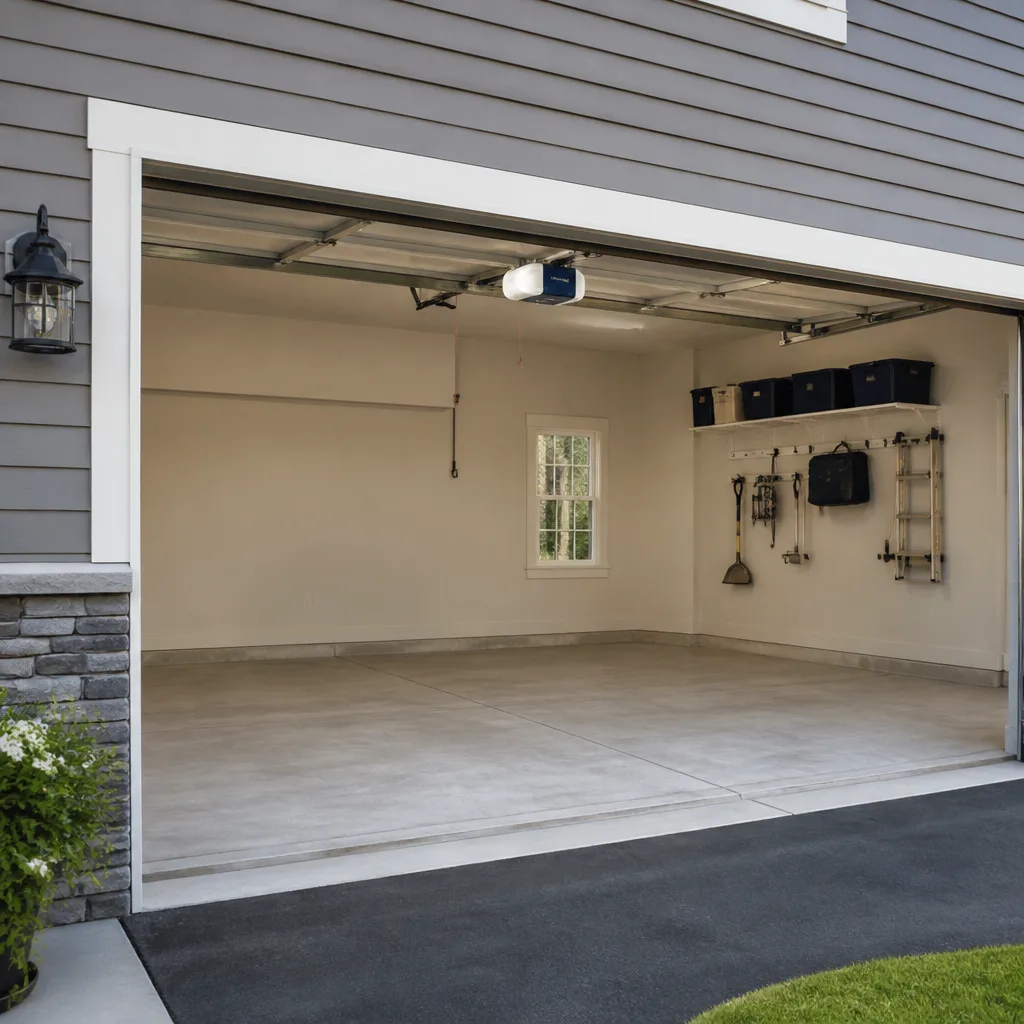 Chamberlain openers
Full 25-point door and opener safety check with every visit - springs, cables, rollers, tracks, and your LiftMaster or Chamberlain opener included
You get a price before we start. It does not change when the pro arrives.
Get your free estimateGarage Door Repair Maintenance Checklist for Corpus Christi Homeowners
Most garage door maintenance checklists tell you to lubricate your springs twice a year. That advice was written for doors in dry, inland climates, and it misses the real problem in Corpus Christi. Here, the question isn’t how often you lubricate – it’s which lubricant survives the humidity without washing away and leaving bare metal to oxidize. The failure sequence on a Gulf Coast door runs outside-in: moisture and airborne particles attack springs, cables, and hinges long before the torsion system wears out from cycles. This guide is sequenced around how doors in Corpus Christi actually fail, not how they fail in a climate that doesn’t exist here.
Quick Answer
A garage door maintenance checklist for Corpus Christi should prioritize moisture protection and visual corrosion staging over cycle-count service intervals. Check springs and cables monthly for the transition from surface oxidation to structural compromise, lubricate with a humidity-resistant silicone or lithium product, inspect weatherstripping before and after storm season, and test your opener’s force and limit settings whenever temperatures swing hard. Most of these checks take under fifteen minutes and catch the failures that coastal doors actually see.
Styles & brands we work with
- Raised-panel steel
- Carriage house
- Modern flush
- Full-view glass
- LiftMaster openers
- Chamberlain openers
Table of Contents
- Why Corpus Christi Doors Age Differently
- Choosing the Right Lubricant for High Humidity
- Reading Rust: Surface Oxidation vs. Structural Compromise
- Weatherstripping on the Storm Season Calendar
- Roller and Hinge Inspection for Coastal Wear
- Opener Force and Limit Settings in a Temperature-Volatile Climate
- The Monthly Walkthrough: A Numbered Routine
- When to Call a Professional
Why Corpus Christi Doors Age Differently
Garage doors in Corpus Christi live in a climate that punishes metal differently than most of Texas. Year-round humidity holds a thin film of moisture on every unpainted surface, and onshore breezes carry fine particles that settle into the joints and pivots where lubricant used to sit. The result is that a door here can look fine at 3,000 cycles and be failing at the cable, not the torsion system. Inland doors tend to wear from use; a Corpus Christi door more often wears from exposure.
We’ve seen the pattern repeatedly in our experience working doors across the area. Springs show dots of oxidation at the coil points before anything feels different at the handle. Cables develop flattening and small broken strands near the drum that never announce themselves until the door hangs crooked. Hinges seize at the pin, forcing the panels to work against resistance that accelerates roller wear. None of that is cycle-driven. It’s environmental.
What that means for maintenance is a shift in priorities:
- Visual inspection outranks cycle counting. A door at 2,000 cycles can be further along the failure path than an inland door at 10,000.
- Lubricant selection matters more than lubricant frequency. A product that migrates off the steel in a week is worse than a product applied once a season that stays put.
- Joints and pivots deserve as much attention as springs. The pinned hinge and the roller stem are where humid air gets its first grip.
- Storm season resets the weatherstripping clock, not the calendar quarter.
So instead of a generic twice-a-year routine, this checklist is built around the order in which a Corpus Christi door actually degrades: weatherstripping first, then joints and pivots, then springs and cables, then the opener electronics that compensate for everything going stiff around them.
Choosing the Right Lubricant for High Humidity
In high humidity, the wrong lubricant can do more harm than none. A light oil or a spray that runs can wash off the bearing surfaces within days, leaving steel exposed to moisture it would’ve otherwise shed. Worse, some lubricants attract dust and grit, and in a breezy coastal environment that grit becomes an abrasive paste that wears hinges and rollers from the inside. The right product stays put, repels moisture, and doesn’t collect grit.
Here’s how the main options rank for a Corpus Christi garage door, from best to worst suited to the climate:
- Silicone spray lubricant – best overall. It dries to a thin, non-tacky film that resists moisture without collecting dust, works well on rollers, hinges, and the torsion bearings, and doesn’t gum up in heat. Reapply roughly every few months in humid months.
- White lithium grease – great for hinges and slide points. A thick white lithium grease holds up well on hinge pins and the track where rollers ride, but apply it sparingly. Too much attracts grit.
- Lithium spray – good middle ground. Convenient and easier to apply than grease, though it can be slightly tackier than silicone and needs more frequent reappraisal on dusty doors.
- Heavy axle or bearing grease – avoid on exposed parts. It’s excellent inside sealed bearings but collects grit on exposed hinge pins and rollers, creating an abrasive paste.
- WD-40 or light penetrating oil – avoid as a maintenance lubricant. It displaces water well but evaporates and leaves little protective film, so it needs constant reapplication and does not protect springs or cables from oxidation.
A few practical notes. Never lubricate the tracks themselves – a dry, clean track lets rollers roll; a greased track attracts grit and makes them slide. And on a torsion spring, a light coat of silicone sprayed along the coils and wiped in protects against moisture without trapping dirt. If your springs are already rusting, lubrication slows further oxidation but doesn’t reverse it. Our team handles spring and cable replacement as part of our garage door repair work, so if you’re unsure whether a spring is cosmetic or compromised, it’s worth having it looked at.
Reading Rust: Surface Oxidation vs. Structural Compromise
Not all rust is a problem, and not all rust looks like rust. The useful skill for a Corpus Christi homeowner is knowing the difference between surface oxidation, which is cosmetic and slow, and structural compromise, which is what actually fails. Springs and cables in a humid Gulf Coast climate tend to degrade from the outside in – the first sign is often a faint orange haze on the wire, not a visible flake of metal. Understanding the staging helps you decide when to protect and when to replace.
Use this rough visual guide to stage what you’re seeing:
- Stage 1 – Faint orange haze. Bare metal has just begun to react. Cosmetic. A light coat of silicone and a routine of watching is all it needs.
- Stage 2 – Discrete rust spots or freckling. Oxidation has localized. Wipe it down, lubricate, and check monthly. If the rust is at a coil contact point, watch it more closely.
- Stage 3 – Uniform surface rust with a rough texture. The protective coating is compromised along a length of the spring or cable. Still functioning for now, but it should be evaluated by a technician, because the metal is thinning.
- Stage 4 – Flaking, pitting, or thickness loss. The metal has lost cross-section. This is a structural concern, not a cosmetic one, and should be replaced.
- Stage 5 – Visible cracks, broken strands, or a kink. A failure is imminent or in progress. Do not run the door. Call a professional.
The most important judgment is at stage 4 and 5. A torsion spring or a cable at that point doesn’t just stop working – it’s a safety hazard to run the door or to handle the parts. Our team regularly inspects and replaces springs and cables, and we always recommend a professional evaluation the moment rust crosses from surface into structure. If you’re seeing flaking or a cable with broken strands, book garage door repair rather than wait for a failure.
Weatherstripping on the Storm Season Calendar
Weatherstripping on a Corpus Christi door should be inspected before and after the storm season, not on the calendar quarter. The rubber seal along the bottom of the door and the perimeter seals around the frame are what keep wind-blown rain and humidity from getting behind the door and into the pivots, tracks, and the steel of the panels. When seaso nal storms roll through, the seals take the first hit. They crack, harden, or pull away from the door, and the door underneath starts to corrode in places you don’t see until the damage is well along.
Here’s a cadence that fits the local climate better than a quarterly reminder:
- Before storm season – inspect the bottom seal, the perimeter seal, and any visible weatherstripping at the top and sides. Look for cracks, gaps, or a seal that’s compressed flat.
- After any significant storm event – run your hand along the bottom seal and check for tears or sections that have pulled away. Check the perimeter seal for water intrusion.
- Mid-season, halfway through – a quick visual, especially if the door faces the weather.
- Once a year, generally – a full inspection including the bottom seal, side seals, and the top seal, with the door in both the closed and open positions.
What to look for:
- A bottom seal that no longer touches the floor evenly, letting a gap appear at the edges.
- Perimeter weatherstripping that has hardened or cracked where it contacts the door.
- Seals that have shrunk or pulled away at the corners, leaving metal exposed.
- Any visible daylight at the corners or along the bottom when the door is closed.
Weatherstripping is one of the cheapest parts to replace and one of the most consequential to ignore. A door with good seals sheds water and holds a stable inner environment; a door with failing seals lets moisture past every cycle. If your seals are more than a few years old or you can’t tell whether they’re sealing, have them looked at. We treat seals and their inspection as part of routine maintenance, and we’re glad to check yours on a service call.
Roller and Hinge Inspection for Coastal Wear
Rollers and hinges are where coastal wear shows earliest, and where it’s most often missed. The roller stems sit in the hinges, and the hinge pins are directly exposed to humid air. In a Corpus Christi door, a hinge that has seized at the pin forces the rollers to drag rather than roll, which wears the roller wheels from the outside in and puts extra load on the opener. A door that looks fine from the driveway can be fighting itself at every hinge.
What to inspect on rollers:
- Roller wheel surface. A worn roller develops flat spots or a rough texture. A healthy roller is smooth and round.
- Roller stem play. The stem should sit snug in the hinge. Excessive wobble means the hinge or the roller is worn.
- Nylon vs. steel. Nylon rollers run quieter and resist corrosion better; steel rollers last longer but corrode in humidity. Either way, a cracked or chipped roller is a replace.
- Roller tracking. A roller that rides the edge of the track or rattles is out of alignment.
What to inspect on hinges:
- Hinge pin tightness. A hinge that wobbles at the pin is on its way to failure. A hinge that feels stiff or squeaks needs a lubricant.
- Hinge plate rust. Surface rust on the plate is cosmetic; metal loss at the pin or a cracked plate is not.
- Hinge alignment. Panels should sit flush; a hinge that’s bent or a panel that’s out of alignment suggests a hinge has worked loose.
- Lubrication at the pin and the roller stem. A silicone or lithium spray at both points is the routine that keeps a coastal door from grinding itself down.
We’ve seen plenty of doors where a few dollars of hinge work and roller replacement prevented a much bigger repair. Our technicians have up to 15 years of experience with the major systems a Corpus Christi homeowner is likely to have, whether it’s a Chamberlain opener or an Amarr door. If you want an inspection, call (866) 389-3763 – estimates are free.
Opener Force and Limit Settings in a Temperature-Volatile Climate
Opener force and limit settings drift in a climate where temperature swings quickly, and that drift is a common reason a door that worked last month now stops halfway or reverses for no apparent reason. The opener is set to a specific force and travel limit at installation. When the weather shifts, the door’s resistance changes, and the opener’s settings may no longer match. The result is a door that thinks it’s hitting an obstruction when it isn’t, or one that closes on an object without reversing.
Here’s how to test the two settings yourself without touching the adjustments:
- Force test – closing. Put a small object, like a rolled towel, in the door’s path and close it. The door should reverse on contact. If it presses and holds, the close force is set too high and needs adjustment by a technician.
- Force test – opening. With the door closed, disengage the opener and lift the door by hand to about halfway. It should lift with modest effort. If it’s very heavy, the door balance or spring is the problem, not the opener.
- Limit test. Run the door fully open and fully closed and watch where it stops. If it stops short, reverses before the floor, or hits the floor and reopens, the limit settings are off.
- Safety reverse check. With the door closing, wave an object in front of the safety sensors. The door should reverse. If not, the sensors need cleaning or alignment.
If a test fails, don’t adjust the force or limit blindly. Those settings are safety-critical: set too high, and the door won’t reverse; set too low, and it reverses at the slightest resistance. Either way, the door is unsafe. We handle garage door opener repair as its own specialty, including smart and connected systems, and we can dial in the settings precisely and check the door balance at the same time. If your door is unbalanced or your opener is fighting a heavier door than it was set for, that’s a job for a trained technician.
The Monthly Walkthrough: A Numbered Routine
A fifteen-minute walkthrough once a month catches nearly every problem before it becomes a failure. This routine is written for the Corpus Christi climate, so it leads with the moisture and corrosion checks and follows with the mechanism checks.
- Look at the weatherstripping. Run a hand along the bottom seal and the perimeter; check for cracks, gaps, or a seal no longer touching the floor.
- Inspect the springs and cables. Look for orange haze, freckling, or surface rust on the springs. Check cables for flattening, wear, or broken strands near the drum. Use the rust staging guide above.
- Lubricate the moving parts. A light silicone spray at the hinge pins, roller stems, and torsion bearings; a thin coat on the spring coils. Avoid the tracks.
- Test the balance. Disengage the opener and lift the door halfway. It should lift with modest effort and hold its position. If not, the springs are the likely cause.
- Listen and feel. Run the door up and down. Listen for grinding, rattling, or a thump. Feel for vibration at the hinges.
- Test the safety reverse. Waving an object in the door’s path should reverse it; a door that doesn’t reverse needs prompt attention.
- Check the opener force and limit settings using the tests above, and watch for drift after a temperature swing.
That’s the whole routine. If a month goes by and everything checks out, you’ve confirmed the door is in good shape. If something fails, you’ve caught it early enough to be a smaller repair than a broken door in the middle of a storm. For a deeper inspection at any point, we’re a phone call away.
See the difference
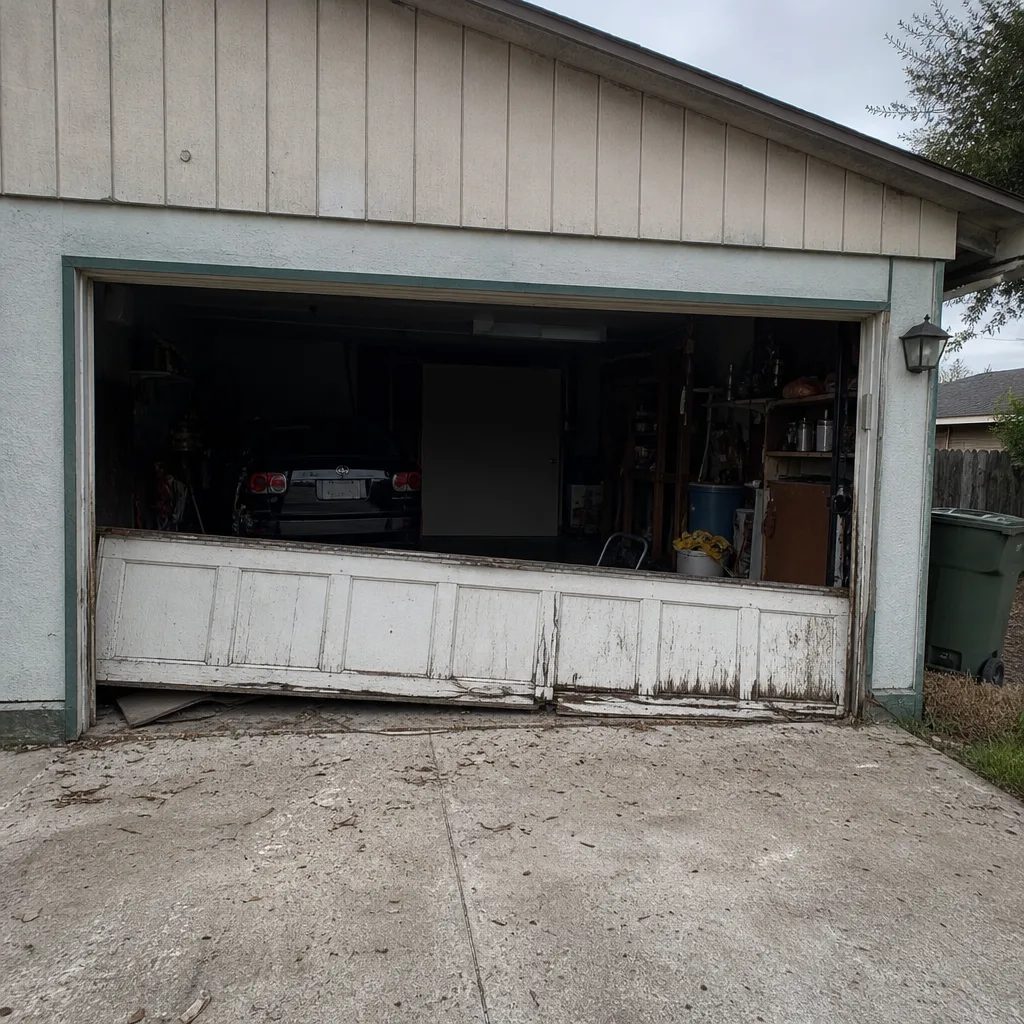 Before
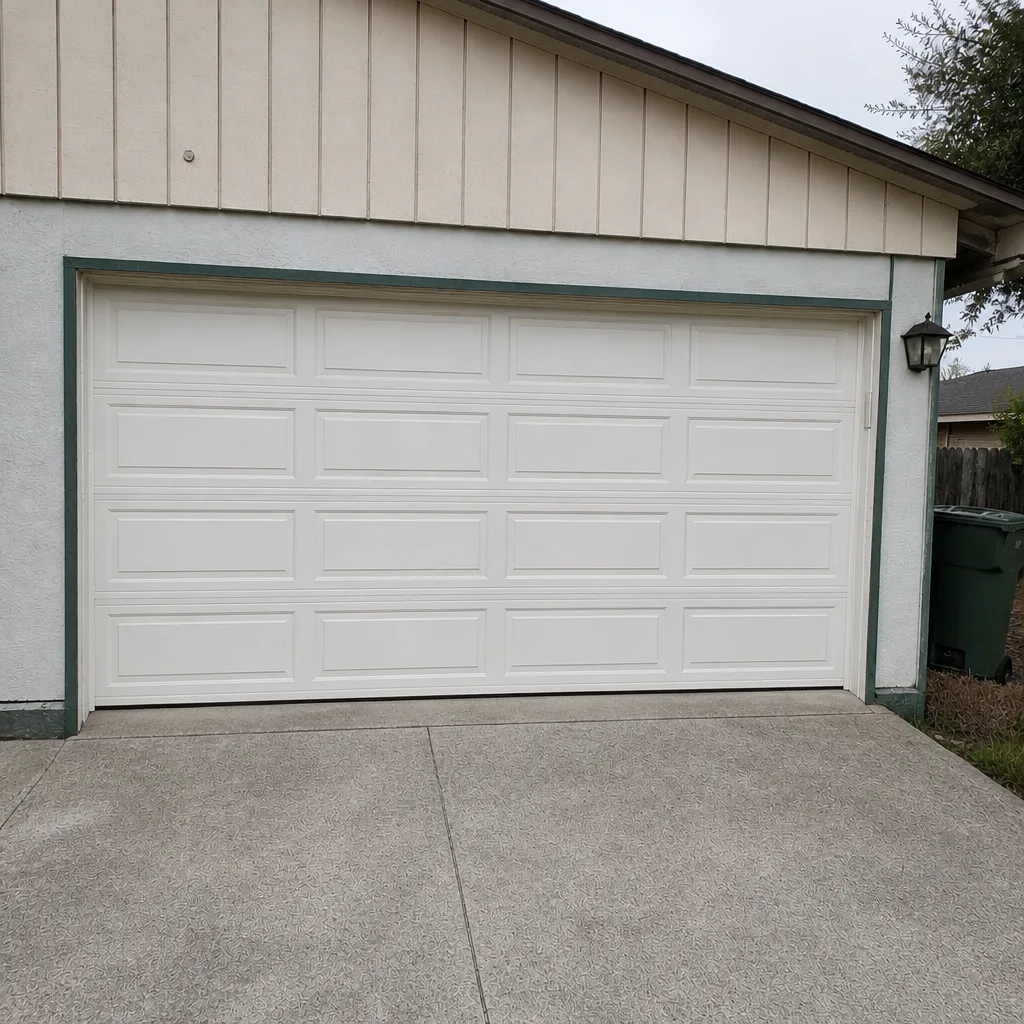 After
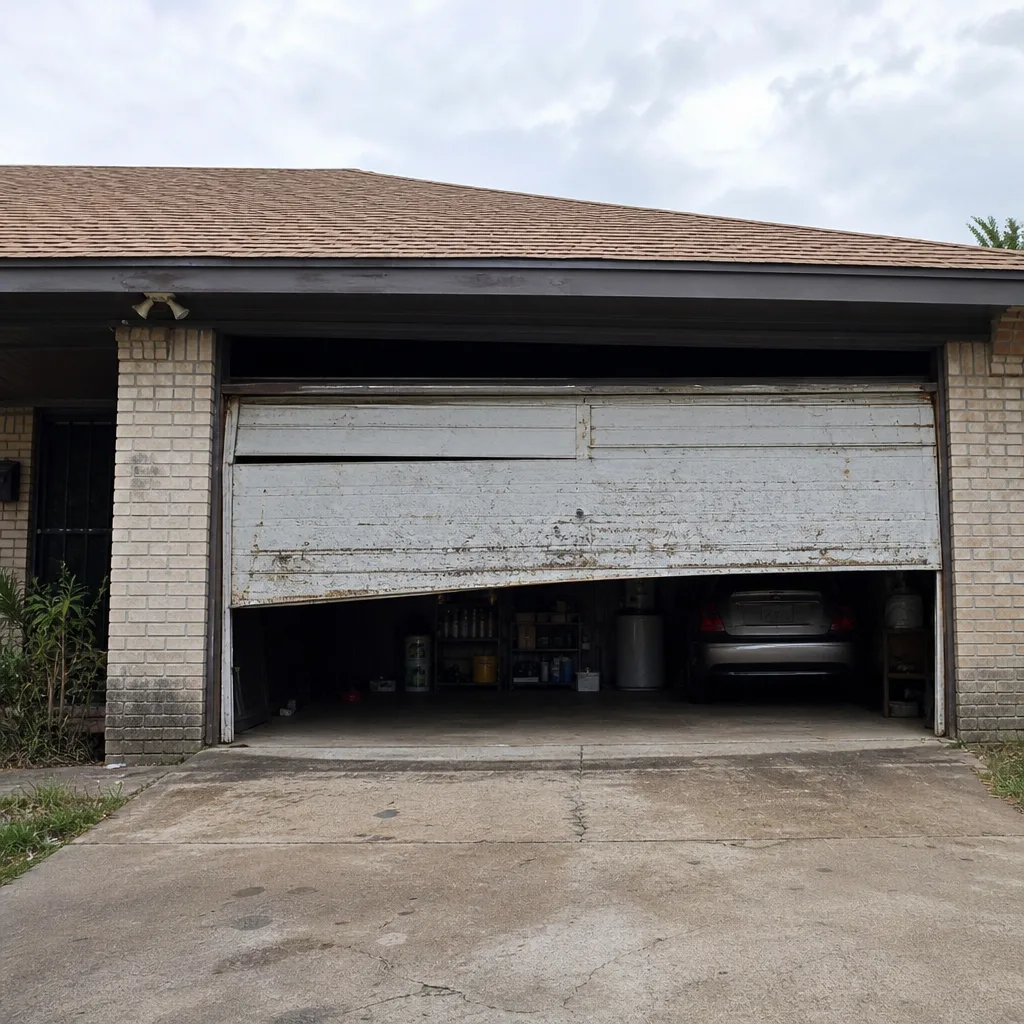 Before
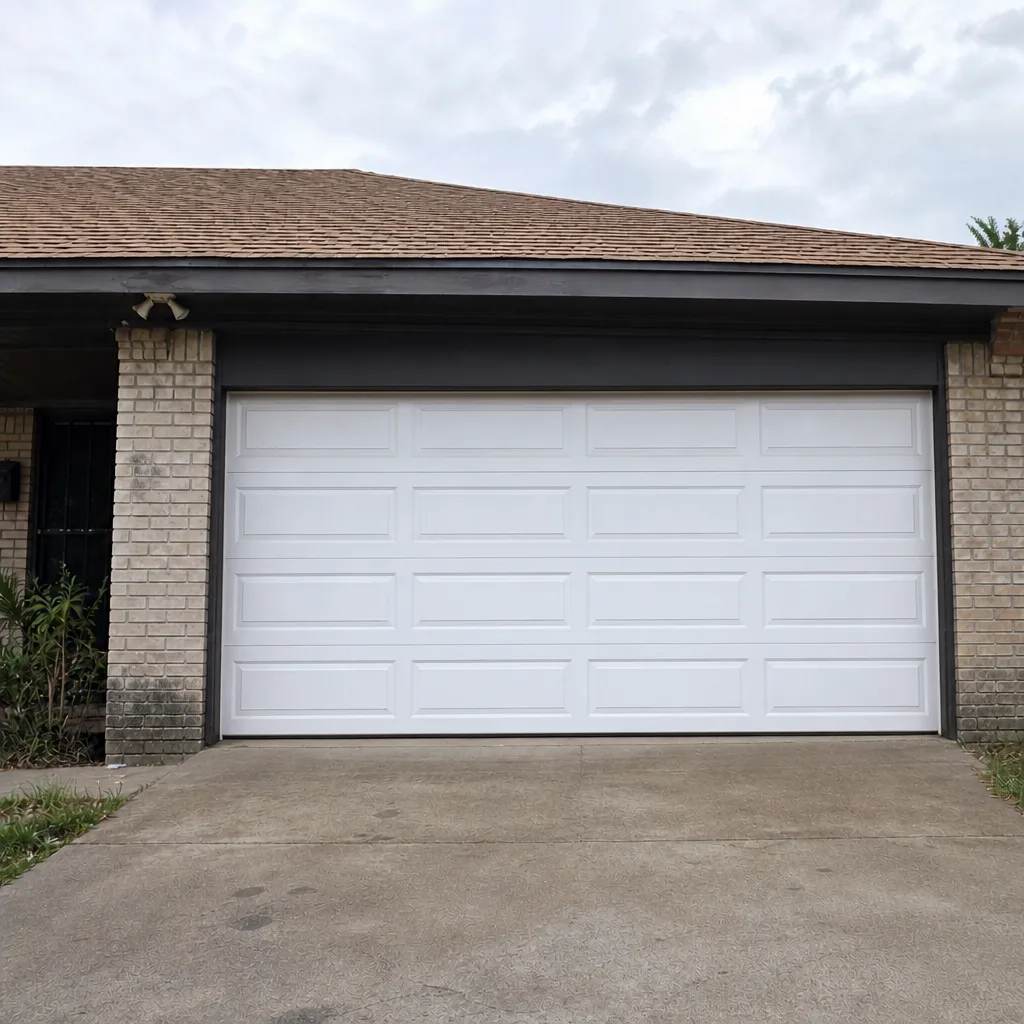 After
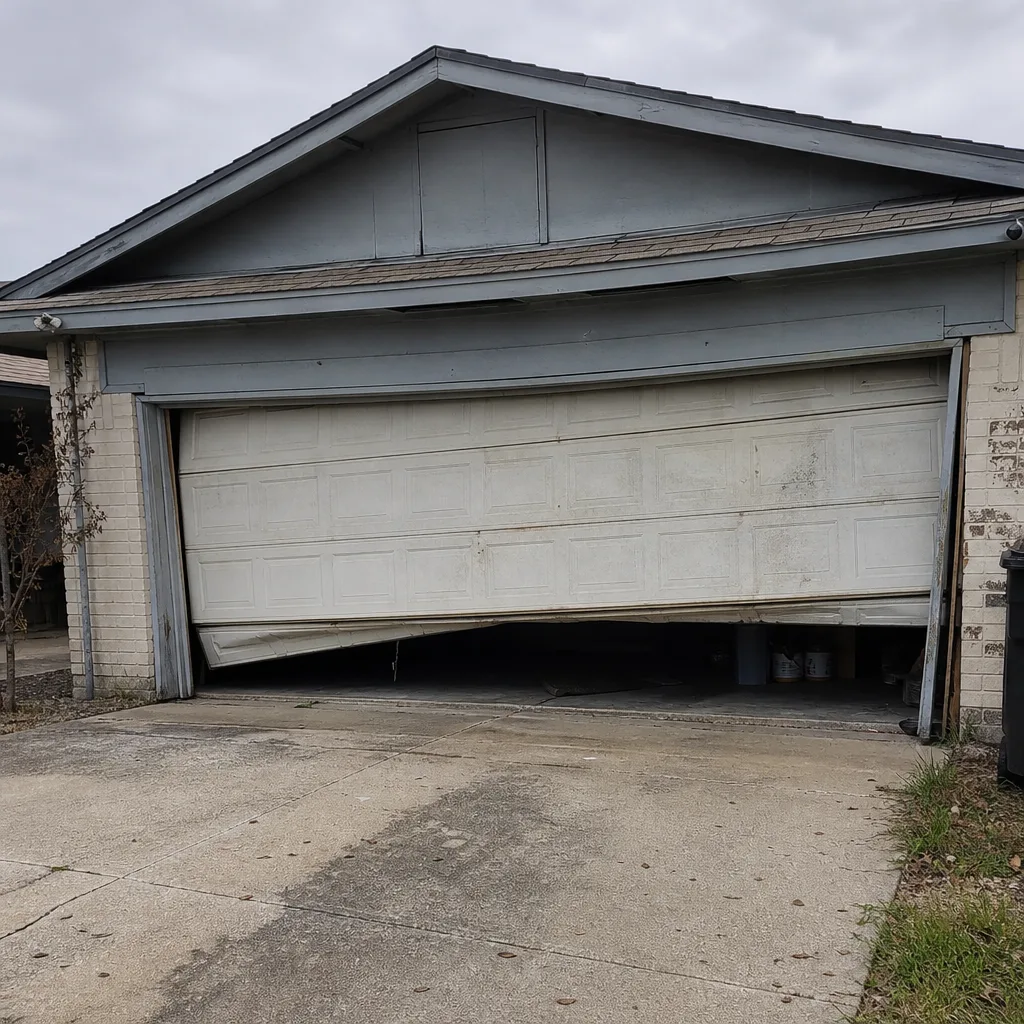 Before
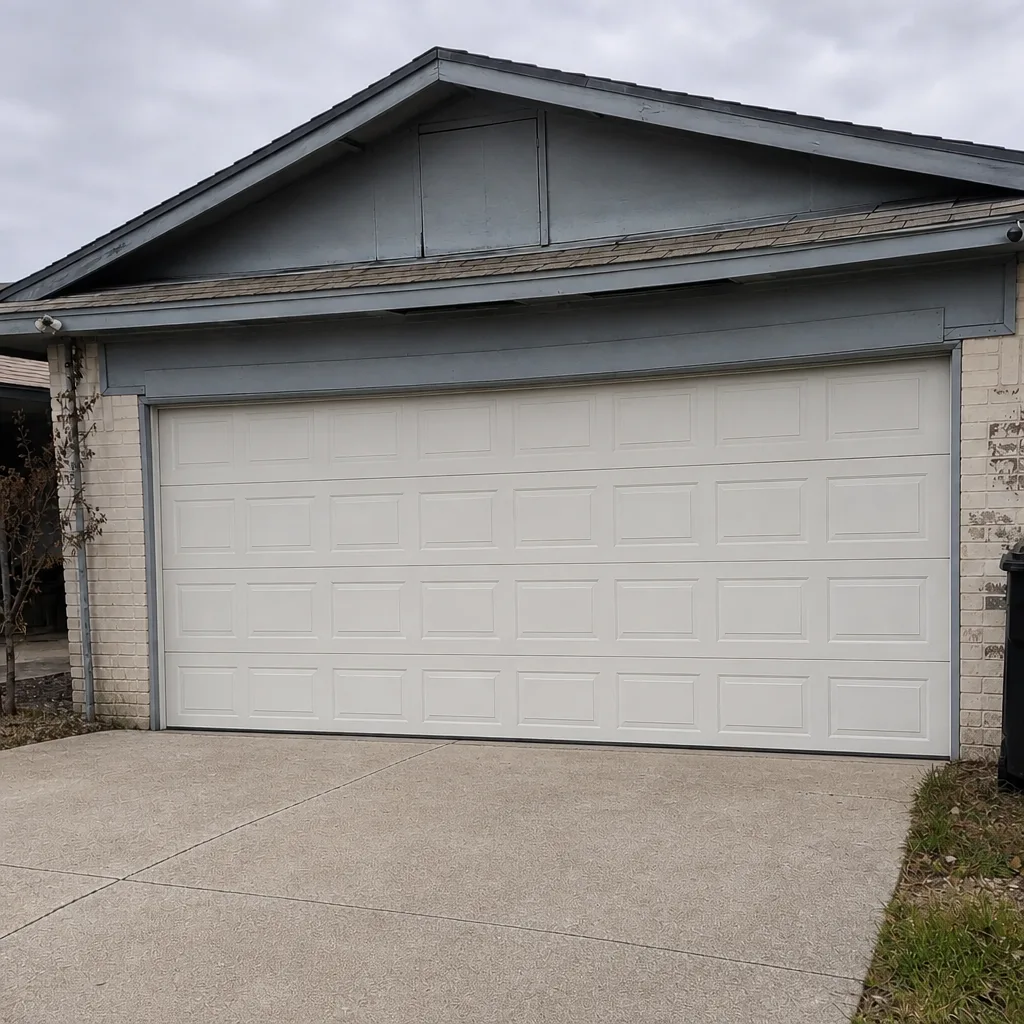 After
Common Mistakes to Avoid
- Lubricating the tracks. A greased track collects grit and turns rollers into sliders. Keep the track dry and clean; lubricate the rollers and hinges, not the track.
- Assuming the door is fine because it runs smoothly. Coastal failures often begin as surface oxidation and cable damage that don’t yet affect how the door runs. A door with visible surface rust on springs is a door that needs watching, not a door that’s fine.
- Replacing weatherstripping on a calendar schedule and ignoring storm events. A storm season resets the clock. Inspect after any significant storm and don’t wait for the next calendar mark.
- Tightening the opener force to “fix” a heavy door. If the door feels heavy or stops short, the door balance or springs are the likely cause. Cranking the force up to push a heavy door wears out the opener and creates an unsafe door.
- Handling a spring or a cable yourself. A torsion spring or cable under load is dangerous to touch without training. If it’s broken or compromised, call a professional.
- Ignoring a single broken cable strand. A cable with broken strands is a cable that is failing. Don’t run the door on it.
- Treating a grind or squeal as normal. Noise is a symptom. Grinding often means a worn roller, an out-of-alignment hinge, or a seizing pin, and it’s easier to fix before it becomes a door that won’t open.
When to Call a Professional
Some jobs are a save and some are a call. If you’re seeing a spring or cable that has crossed from surface rust into flaking, pitting, or a broken strand, that’s a call. A door that won’t balance, a door that reverses on its own, an opener that drifts its force settings, or a door that’s been heavy since the last cold snap – all of those need a technician. The same goes for a door that’s off its track, a roller that’s come out, or a hinge that’s bent. For anything involving a spring or cable under load, don’t handle it yourself; the stored energy makes those parts genuinely dangerous to touch without training. Spencer Garage Door Repair offers free estimates in Corpus Christi – call (866) 389-3763. We answer 24/7. Fast dispatch from 7am to 7pm, Sunday through Friday.
Frequently Asked Questions
A light silicone or lithium application every few months is a good baseline, with a check after any long humid stretch or temperature swing. In high humidity, the product matters more than the frequency – a silicone spray that stays put protects better than a light oil that migrates off. If you’re not sure what’s on your door now, a technician can tell you. Call (866) 389-3763 for an exact answer.
Faint orange haze and isolated freckling on the wires are surface oxidation and can be slowed with lubrication. Flaking, pitting, or visible loss of metal thickness on a spring or cable is structural, and that’s when it should be replaced. If you see broken strands on a cable or a broken spring, don’t run the door. Call (866) 389-3763 for a free estimate.
Temperature swings change the door’s resistance, and on a Corpus Christi door those swings happen often. The opener’s force and limit settings are set at installation, so as resistance changes, the door can stop short, reverse, or hit the floor hard. Most of the time it’s a simple setting adjustment; sometimes the door’s balance has shifted and that’s the real issue. Call (866) 389-3763 and we’ll trace it.
Yes – the bottom seal and perimeter weatherstripping are among the simpler parts to replace, and if you’re comfortable with the job, a homeowner can do it. What’s harder is judging when seals have failed, because the door can look fine from the driveway. If you’re not sure, have them checked during a routine service call.
Close the door with an object in its path – a rolled towel works – and watch whether the door reverses on contact. A door that presses and holds is not reversing properly and needs prompt attention. This is a safety-critical check and one that should be done every month. If it fails, stop using the door and get it serviced.
Year-round humidity and fine airborne particles are harder on springs, cables, and hinges than typical inland conditions, so failures show up as exterior corrosion and joint seizing rather than cycle wear. The fix is the inspection sequence in this guide: weatherstripping first, then joints and pivots, then springs and cables, and opener settings on any hard swing. For a hands-on inspection, call (866) 389-3763 – estimates are free.
The Bottom Line
A garage door maintenance checklist for Corpus Christi works best when it’s sequenced around how coastal doors actually fail. That means weatherstripping before and after storm season, joint lubrication with a product that won’t wash away, spring and cable inspections that read rust staging rather than cycle counts, and opener settings checked whenever temperatures swing hard. Do those checks monthly and most failures get caught as small repairs instead of broken doors. The parts of the routine that require a trained hand – springs, cables, opener settings, and anything unbalanced or off its track – are what we handle. Call (866) 389-3763 for a free estimate; our technicians work across the major brands, from Clopay and Amarr doors to Genie and Chamberlain openers, and we work on what you already have. We answer 24/7. Fast dispatch from 7am to 7pm, Sunday through Friday. Garage doors are all we do, and that focus is why we can trace a problem to its source instead of guessing at the fix.
Written by the team at Spencer Garage Door Repair.